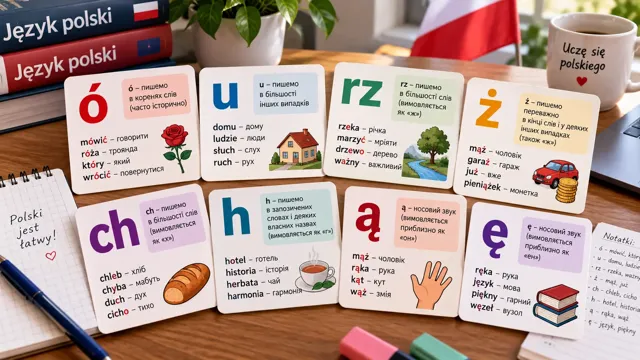
Swój or jego: when Polish says "one's own" and when "his" — swoje dokumenty, jego szef

Found our content useful? Add Jobework to your preferred sources and Google will show you our articles more often.
English has no real equivalent of the Polish word swój. "He took his documents" can mean his own or someone else's; Polish makes you choose. "Marek wziął swoje dokumenty" — Marek took his own documents. "Marek wziął jego dokumenty" — Marek took someone else's. At an interview or in an application the difference can matter, so let us go through the rule clearly.
How "swój" works
Swój, swoja, swoje is a reflexive possessive pronoun. It means "belonging to the person doing the action" and always refers back to the subject of the sentence. It does not matter whether the subject is "I", "you", "he" or "they": swój adapts to it.
- Biorę swoje dokumenty. — I take my documents. (I'm the owner)
- Anna lubi swojego szefa. — Anna likes her (own) boss.
- Pracownicy kochają swoją pracę. — The workers love their job.
- Mamy swoje zdanie. — We have our own opinion.
When we use jego, jej, ich
The pronouns jego (his), jej (her), ich (their) mean that the thing belongs to someone other than the subject. Compare:
- Anna lubi swojego szefa. — Anna likes her own boss.
- Anna lubi jej szefa. — Anna likes another woman's boss.
- Marek pomaga swojemu bratu. — Marek helps his own brother.
- Marek pomaga jego bratu. — Marek helps another man's brother.
The pronouns jego, jej, ich do not change: z jego szefem, w jej firmie, o ich pracy. Only the noun changes.
For "I" and "you" the choice is freer
In the first and second person the language allows both variants: Biorę swoje dokumenty and Biorę moje dokumenty are both correct. But they sound different. Swój sounds more natural for ordinary things, and mój when we stress that it is exactly mine and not someone else's: To jest moja paleta, nie twoja.
Swój is not used with the subject itself
This is important: swój cannot be part of the subject. We do not say "Swój szef przyszedł", only Mój szef przyszedł or Jego szef przyszedł. In other words swój looks for the subject in the sentence and points back to it, but does not belong to the subject itself.
- Wrong: "Swój kolega mi pomógł".
- Correct: Mój kolega mi pomógł. — My colleague helped me.
Declension of mój and swój
These pronouns decline like adjectives. Here it is for mój (the endings for swój are the same):
All possessive pronouns
| Person | Possessive |
|---|---|
| ja | mój, moja, moje |
| ty | twój, twoja, twoje |
| on / ono | jego |
| ona | jej |
| my | nasz, nasza, nasze |
| wy | wasz, wasza, wasze |
| oni / one | ich |
| — (zwrotny) | swój, swoja, swoje |
Jego, jej, ich never change: z jego bratem, w jej firmie, o ich dzieciach.
Declension of mój (twój, swój, nasz, wasz work the same way)
| Case | Masculine | Neuter | Feminine | Pl.: men | Pl.: others |
|---|---|---|---|---|---|
| Nominative | mój | moje | moja | moi | moje |
| Genitive | mojego | mojego | mojej | moich | moich |
| Dative | mojemu | mojemu | mojej | moim | moim |
| Accusative | mojego / mój | moje | moją | moich | moje |
| Instrumental | moim | moim | moją | moimi | moimi |
| Locative | moim | moim | mojej | moich | moich |
Twój, nasz, wasz, swój decline in the same way: w naszej firmie, z waszym szefem, o swoich planach.
Examples in sentences:
- Gdzie jest twój telefon? — Where is your phone?
- Rozmawiałem z naszym kierownikiem. — I talked to our supervisor.
- Każdy bierze swoje rzeczy. — Everyone takes their own things.
Own, not somebody else's: własny
When you need to stress that something is truly "own", we use własny, własna, własne: mam własny samochód, własne mieszkanie, własną firmę. At work and in adverts the word turns up often: na własnym mieszkaniu — "in your own housing", własny dojazd — "your own transport".
Workplace examples
- Proszę zabrać swoje rzeczy. — Please take your things.
- Proszę sprawdzić swoje dokumenty. — Please check your documents.
- Kierowca zostawił swoją kartę w kabinie. — The driver left his own card in the cab.
- Kierowca zostawił jego kartę w kabinie. — The driver left another man's card in the cab.
- Każdy ma swoje obowiązki. — Everyone has their duties.
- Każdy robi swoje. — Everyone does their own thing.
Set phrases with swój
Forms of swój often appear in ready-made expressions worth learning by heart:
- po swojemu — in one's own way: Każdy robi to po swojemu.
- na swoim miejscu — in its place: Odłóż to na swoje miejsce.
- swoją drogą — by the way, incidentally.
- mieć swoje lata — to be no longer young.
- robić swoje — to get on with one's own job without distraction.
A dialogue on shift
- — Czyja to kurtka? — Whose jacket is this?
- — To nie moja. To kurtka Marka, a to jest jego plecak. — It's not mine. It's Marek's jacket, and this is his rucksack.
- — A Marek sam wziął swoją kartę? — And did Marek take his own card himself?
- — Tak, wziął swoją, nie moją. — Yes, he took his own, not mine.
Three typical mistakes
- "Marek wziął jego dokumenty". This means the documents are someone else's. If they are his own: Marek wziął swoje dokumenty.
- "Swój kolega mi pomógł". Swój does not stand with the subject. Correct: mój kolega mi pomógł.
- "W jego firmie" instead of "w swojej firmie" when it is the subject's own company: Piotr pracuje w swojej firmie.
Practice: swój, mój or jego?
Choose the correct option.
- Anna wzięła ___ dokumenty. (her own)
- Marek pomaga ___ bratu. (his own)
- Pracownicy lubią ___ szefa. (their own)
- ___ szef przyszedł dziś wcześnie. (my)
- Anna lubi ___ kolegę z pracy. (Marek's colleague, someone else's)
- Każdy ma ___ obowiązki. (their)
- Proszę zabrać ___ torbę. (to a gentleman or lady)
- Mam ___ samochód i ___ mieszkanie. (own)
Answers: 1 — swoje; 2 — swojemu; 3 — swojego; 4 — Mój; 5 — jego; 6 — swoje; 7 — swoją; 8 — własny and własne.
Summary
Remember a simple rule: if the thing belongs to the subject of the sentence, take swój; if to someone else — jego, jej, ich; if it is part of the subject — mój, twój, nasz. To stress "ownership", własny will do. That is enough not to mix up whose things and documents you mean at work and in applications.
If this article helped, mark Jobework as a preferred source — you'll see our new materials more often in Google search.
Subscribe to our newsletter:
Latest Posts:

More in this section: Polish grammar rules in plain words
Questions and word order in Polish: czy, gdzie, dokąd, ile, z kim

Polish language rules: 8 things worth knowing from day one
Numbers with nouns in Polish: dwa psy, pięć psów, 22 lata, 5 złotych