Adjectives in Polish: dobry, dobra, dobre, dobrzy — gender, number and case in one scheme
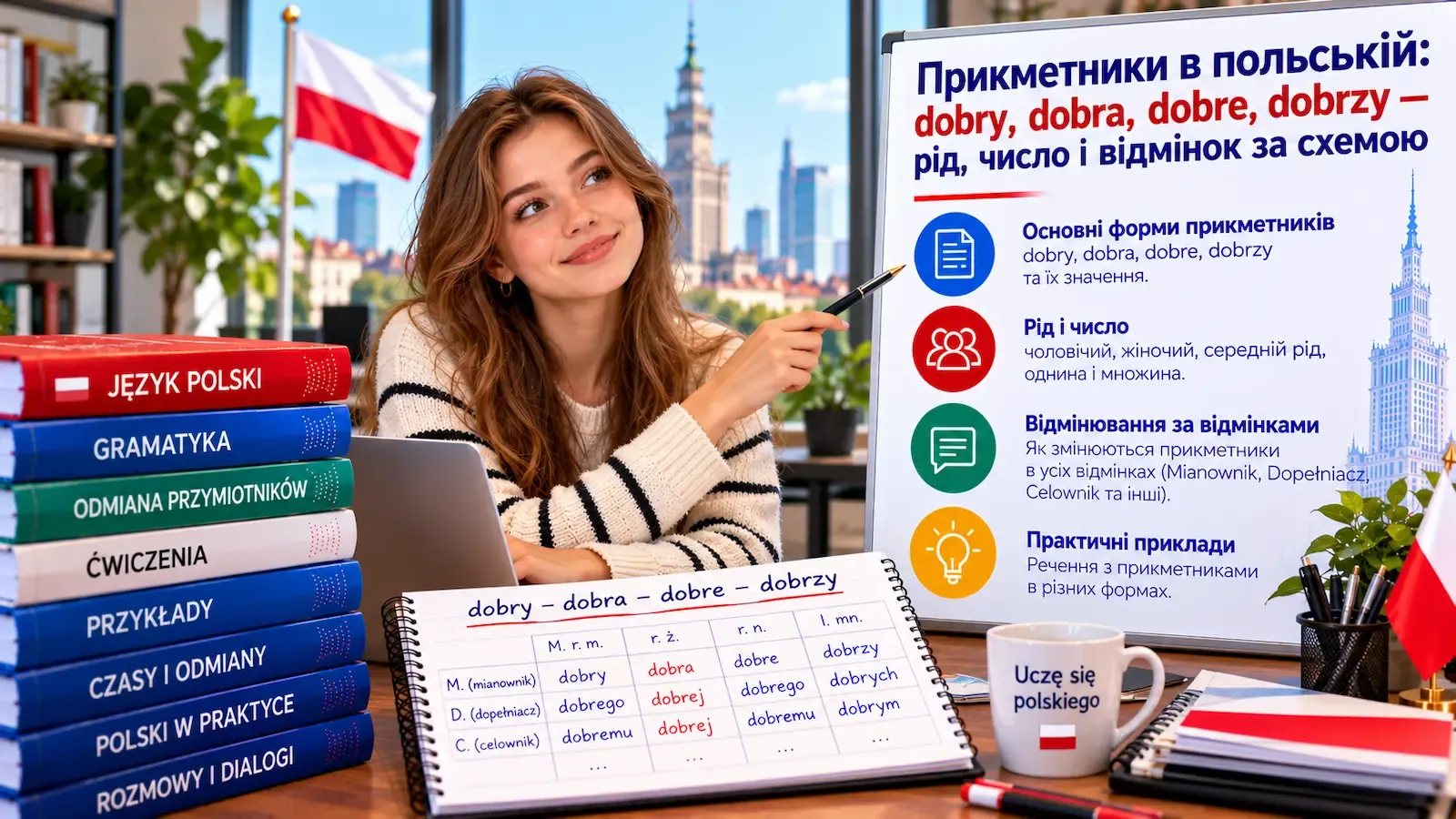

In Polish an adjective always dresses in the same outfit as its noun: gender, number and case have to match. English speakers are not used to this, because in English "good" never changes. In Polish you say "dobry pracownik", "dobra praca", "dobre miejsce", and in the plural "dobrzy pracownicy" — and the ending depends on the case as well. Phrases like "dobry praca" or "w dobry firmie" sound to a Pole as odd as "a good works" would to you.
Let us go through the system from the practical side: first the nominative (it is the most frequent), then the cases you need every day, then typical workplace pairs.
Nominative singular: three genders
The basic form of the adjective depends on the gender of the noun:
- Masculine: -y or -i — dobry pracownik, drogi samochód, nowy kolega.
- Feminine: -a — dobra praca, droga ulica, nowa koleżanka.
- Neuter: -e — dobre miejsce, drogie okno, nowe stanowisko.
So the ending carries the information about gender: -y/-i for masculine, -a for feminine, -e for neuter. If you learn to add them automatically, half of the work is done.
Hard and soft stems
The ending -y is written after hard consonants, and -i after k, g and soft ones. So: dobry, mały, nowy (hard), but wysoki, drogi, tani, głupi, ostatni (soft or after k/g). In the feminine and neuter the type does not matter: dobra, tania, wysoka; dobre, tanie, wysokie.
Plural: a special form for men
In the plural Polish distinguishes two variants. For groups that include at least one man, the adjective takes -i or -y with an alternation: dobry → dobrzy, wysoki → wysocy, miły → mili, młody → młodzi. For everything else (women, animals, objects) it is simply -e:
- Dobrzy pracownicy. — Good workers (men or a mixed group).
- Dobre pracownice. — Good (female) workers.
- Dobre miejsca, dobre okna, dobre oferty.
The cases you need every day
Below, the word dobry shows how an adjective changes. The endings are the same for all adjectives.
- Genitive (kogo? czego?): masculine and neuter -ego (dobrego pracownika), feminine -ej (dobrej pracy).
- Accusative (kogo? co?): feminine -ą (dobrą pracę), masculine animate as the genitive (widzę dobrego pracownika), masculine inanimate and neuter as the nominative (mam dobry samochód, dobre miejsce).
- Instrumental (z kim? czym?): masculine and neuter -ym (z dobrym szefem), feminine -ą (z dobrą koleżanką).
- Locative (o kim? gdzie?): masculine and neuter -ym (w dobrym zespole), feminine -ej (w dobrej firmie).
For soft adjectives we write -i- instead of -y-: wysokiego, wysokiej, z wysokim, w wysokiej. And for the plural: genitive and locative -ych/-ich (dobrych pracowników, w dobrych firmach), instrumental -ymi/-imi (z dobrymi kolegami).
Workplace collocations
It is useful to learn adjectives in ready-made pairs, because they keep repeating in adverts and conversations:
- stała praca, ciężka praca, ciekawa praca — permanent, hard, interesting work.
- dobra płaca, wysokie wynagrodzenie, niskie stawki — good pay, a high salary, low rates.
- nocna zmiana, dzienna zmiana, pierwsza zmiana — the night, day and first shift.
- nowy pracownik, doświadczony kierowca, młodzi ludzie — a new employee, an experienced driver, young people.
- pełny etat, wolny dzień, wolne miejsce — a full-time job, a day off, a vacancy.
- ważny dokument, aktualne zaświadczenie — an important document, a valid certificate.
Adjectives you need for safety
In a warehouse or on a building site it is especially important to understand warning words. They all change by gender: ciężka paleta (a heavy pallet), śliska podłoga (a slippery floor), gorąca maszyna (a hot machine), ostry nóż (a sharp knife), niebezpieczne miejsce (a dangerous place), mokra powierzchnia (a wet surface), zimne pomieszczenie (a cold room).
Demonstrative and possessive pronouns
The words ten, ta, to (this), mój, moja, moje, twój, twoja, twoje, nasz, nasza, nasze, jaki, jaka, jakie change in the same way as adjectives, by gender and case: ten pracownik, ta praca, to miejsce; w tej firmie, z tym szefem.
A dialogue about work
- — Jaka jest ta praca? — What's this job like?
- — Dobra, stała, ale ciężka. Pracuję na nocnej zmianie. — Good, permanent, but hard. I work the night shift.
- — A jacy są ludzie? — And what are the people like?
- — Mili. Mam dobrego szefa i dobrych kolegów. — Nice. I have a good boss and good colleagues.
Three typical mistakes
- "Dobry praca". Correct: dobra praca. Praca is feminine, so -a.
- "W dobry firmie". Correct: w dobrej firmie. After w the locative with the ending -ej.
- "Z dobry szefem". Correct: z dobrym szefem. The instrumental -ym.
Practice: put the adjective in the right form
Put the adjective in brackets into the required form.
- To jest ___ praca. (dobry)
- Mam ___ szefa. (dobry)
- Pracuję w ___ firmie. (duży)
- Rozmawiam z ___ koleżanką. (nowy)
- To są ___ pracownicy. (młody, men)
- Szukam ___ miejsca pracy. (stały)
- Mam ___ okno. (nowy)
- Wolę ___ zmianę. (dzienny)
Answers: 1 — dobra; 2 — dobrego; 3 — dużej; 4 — nową; 5 — młodzi; 6 — stałego; 7 — nowe; 8 — dzienną.
How to learn without getting muddled
The best strategy is to learn the noun together with the adjective. Instead of "praca — work" write "dobra praca, ciężka praca". Then the gender and the ending stick on their own. For cases a habit helps: ask yourself "what gender? what ending?" and choose -a, -y, -e, and then -ej, -ego, -ym, -ą. After a week of regular exercises, adjectives stop being a problem.
Subscribe to our newsletter:
Latest Posts:

More in this section: Polish grammar rules in plain words
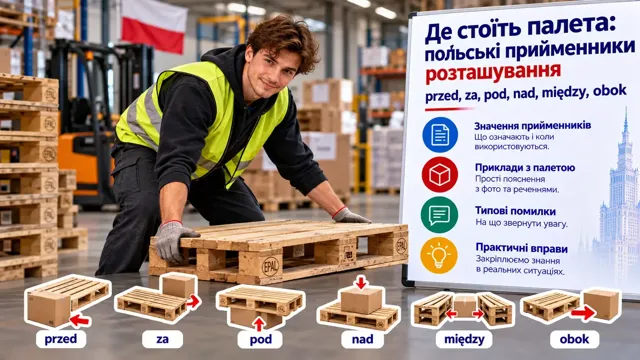
Where is the pallet? Polish prepositions of position: przed, za, pod, nad, między, obok
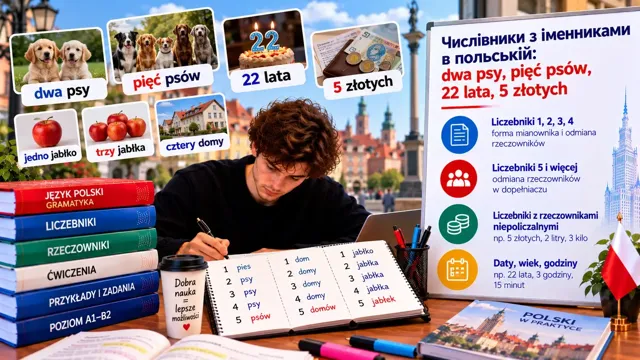
Numbers with nouns in Polish: dwa psy, pięć psów, 22 lata, 5 złotych

W or na in Polish: how to choose the right preposition of place (w pracy, na budowie)