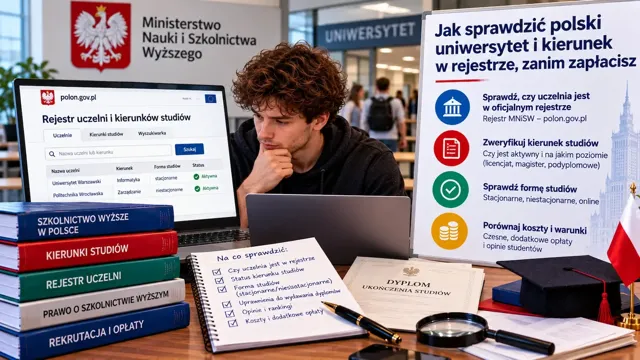
Studying and Working in Poland: Work Rules for International Students

Found our content useful? Add Jobework to your preferred sources and Google will show you our articles more often.
Most international students in Poland don't ask "can I work?" as an abstract question. They ask something more nervous: "if I take warehouse shifts, could I lose my residence card?" That's the right worry. Students do have access to the labour market here, but it depends on three things — your mode of study, the legal basis of your stay, and whether you are actually still a student. Below is how it works in practice, what you can realistically earn, and the mistakes we see over and over again.
A quick note for Ukrainian citizens. If you are in Poland under temporary protection, with a CUKR card or another basis under the special act, the employer only files a notification (powiadomienie) with the labour office, and your mode of study does not affect your right to work. The rest of this article is mostly for students from other countries, though the contracts and tax part applies to you as well.
Who can work without a work permit
As a rule, you don't need a zezwolenie na pracę (work permit) if you are:
- a full-time student (studia stacjonarne) at a Polish university — bachelor's, master's or doctoral level. You need a valid residence document: a temporary residence card issued for studies, or a visa issued for the purpose of studying;
- a graduate of full-time studies at a Polish university — after the diploma, a work permit is generally not required, but you still need a valid basis to stay (for example, a residence permit to look for work after graduation);
- a graduate of a Polish secondary school (liceum, technikum) — also exempt under the general rule.
What you show the employer: your student ID (legitymacja studencka) or a certificate from the dean's office (zaświadczenie o studiowaniu) confirming full-time studies, plus your passport and residence card or visa. HR usually copies these and keeps them in your personnel file. Bring a fresh certificate for the current semester — an old one from last year is a common reason for a delayed start.
Who needs a permit or a separate procedure
Here the rules get stricter:
- Part-time, evening and extramural students (studia niestacjonarne). The student exemption does not apply. The employer must get a work permit from the voivodeship office (urząd wojewódzki) or, for citizens of a few countries, register a declaration on entrusting work (oświadczenie o powierzeniu wykonywania pracy) at the local labour office.
- Polish language courses and preparatory courses before university. A language-school student is not a university student in the legal sense, and a visa issued for a course does not, by itself, give you the right to work.
- Students of foreign universities on exchanges or internships — separate rules depending on the programme and who organises it.
This is where a lot of people get caught. Someone spends a year on a Polish language course, sees a job ad "for students", and starts working. Legally, they are not a student, and that work without a permit counts as illegal employment — with consequences for both the worker and the employer, including a possible obligation to leave Poland.
Summer vs semester: is there a difference?
Years ago, full-time students in Poland could work without a permit only during the summer break, July to September. Today, as a general rule, there is no seasonal restriction — you can work all year round. Polish law also doesn't set a weekly hour cap for full-time students, unlike the 20-hour limit you may know from other countries.
There is, however, a common-sense cap. Your residence card was issued for studying, and your university tracks attendance and exams. If you get removed from the student list, your basis for staying in Poland goes with it. So a realistic schedule usually looks like this:
| Period | Realistic hours | What students usually take |
|---|---|---|
| Semester, 1st–2nd year | 12–20 hours a week | 2–3 evening or weekend warehouse shifts |
| Semester, later years | 20–25 hours a week | weekends plus 1–2 weekday shifts |
| Exam session | 0–8 hours | better to pause |
| Summer break | 40–48 hours a week | full shifts, seasonal work, factory lines |
Students who try to keep 35–40 hours during the semester tend to last about two months. Then come the exams, the first failed module, and a very stressful conversation with the dean's office.
The contract: why students are almost always on umowa zlecenie
For a student under 26, the most profitable option is usually an umowa zlecenie — a civil-law contract of mandate. On this contract, a student of a Polish university under 26:
- pays no ZUS contributions — no pension, disability or health contributions;
- pays no income tax (PIT) thanks to the "zero PIT dla młodych" relief, on income up to 85,528 PLN a year.
In practice, gross equals net. At the 2026 minimum rate of 31.40 PLN gross per hour, 80 hours a month during the semester gives you 2,512 PLN in hand, and 160 hours in summer — 5,024 PLN. Many warehouse vacancies pay a bit more than the minimum. You can check your own numbers in the umowa zlecenie salary calculator.
Two details that job ads rarely mention. First, if no contributions are paid, you are not insured with NFZ (the national health fund) through your job. International students must have health insurance anyway — private, or voluntary NFZ insurance at the reduced student rate — so don't let it lapse. Second, the relief ends on your 26th birthday. From that day, normal deductions apply, so the same hourly rate suddenly gives you noticeably less.
An umowa o pracę (employment contract) is also possible for students. ZUS is deducted as for everyone else, but PIT under 26 is still zero. In exchange you get paid holiday, paid sick leave and work experience that counts toward your record. If an employer offers you a full employment contract for the summer, it is often worth it.
What kind of work actually fits a student schedule
Most international students end up in jobs with shift work where Polish isn't required on day one:
- warehouses and logistics centres — order picking, packing, sorting, returns; night and weekend shifts are common and often slightly better paid;
- factories and production — food packing, assembly lines, simple quality checks;
- seasonal summer work — berry picking, greenhouses, vegetable processing;
- hotels and kitchens — housekeeping, dishwashing, kitchen help in high season.
A typical case looks like this. A second-year student from Nepal in Wrocław takes warehouse shifts on Friday evening and Saturday, 8 hours each. That adds up to 60–70 hours a month and about 2,000 PLN net — enough for a room and food, without missing classes. In July she switches to five shifts a week and saves for the next semester.
Another one: a master's student from India in Poznań works only weekends in the semester, then a full-time summer contract on a production line. Same employer all year, so no new BHP training and medical check every few months.
You can browse current openings in the vacancy list, or go straight to jobs for students and jobs without Polish language skills. Many of these are part-time jobs in Poland for students where you can agree shifts week by week.
What happens to your residence card if you stop studying
A residence card for studies is tied to your university. If you are removed from the student list or withdraw yourself, the university informs the voivode, and the residence permit is, as a rule, revoked. A warehouse job alone does not become a new basis for staying.
If you've decided that work matters more than the degree right now, do it in this order:
- don't wait to be removed — first find an employer ready to sign an employment contract with you;
- apply for a temporary residence and work permit (zezwolenie na pobyt czasowy i pracę) while your current stay is still legal;
- keep proof of filing — a stamp in your passport or the UPO confirmation from the MOS system. It matters for your legal stay while the case is being processed, which can take months.
Full-time graduates can apply for a separate permit to look for work after graduation, which gives you time to find a job in your field rather than taking the first offer.
Common mistakes
- Working on "student" terms without student status. A language course, a gap after being removed from the list, extramural studies — none of these give you the work permit exemption.
- A rate below the minimum. On zlecenie, the minimum in 2026 is 31.40 PLN gross per hour. "20 PLN because you're a student" is a violation, not a student discount.
- Paying for a job. Charging a candidate for employment is illegal in Poland. A legal agency must be listed in the KRAZ register.
- No written contract. Without a signed contract you can't prove your hours, your rate, or that you worked at all.
- Not telling the employer your age and status. The ZUS exemption only works if HR knows you're a student under 26. Otherwise contributions get deducted and getting them back is slow.
- Forgotten health insurance. No ZUS means no NFZ through work, and you need valid insurance for your residence card case too.
Checklist before your first shift
- passport and valid residence card or study visa;
- a fresh certificate from your university confirming full-time studies;
- contract signed before you start, rate not lower than 31.40 PLN gross per hour;
- a student/under-26 declaration filled in for HR (for the ZUS and PIT exemption);
- BHP safety training and the occupational medical check (badania lekarskie medycyny pracy) — both paid by the employer;
- a bank account number for salary — the first payment usually arrives around the 10th of the next month;
- shift schedule checked against your timetable and exam dates.
FAQ
How many hours a week can international students work in Poland?
For full-time students the law, as a general rule, sets no weekly limit. In practice, 15–25 hours during the semester and full-time during the summer break is what keeps both your grades and your income stable.
Do I need a PESEL number to start working?
Not always — an employer can sign a contract using your passport details. But a PESEL makes banking, tax returns and visits to the doctor much easier, so it's worth getting.
I'm a part-time (extramural) student. Can I still work?
Yes, but not on the student exemption. Your employer must first obtain a work permit for you, or register an oświadczenie if you are a citizen of one of the countries covered by that procedure. You can start only after that.
Can I keep working right after graduation?
Graduates of full-time studies at Polish universities generally work without a permit. What you need is a valid basis to stay — your study permit expires soon after graduation, so plan the next permit in advance.
If this article helped, mark Jobework as a preferred source — you'll see our new materials more often in Google search.
Subscribe to our newsletter:
Latest Posts:





More in this section: Public universities in Poland
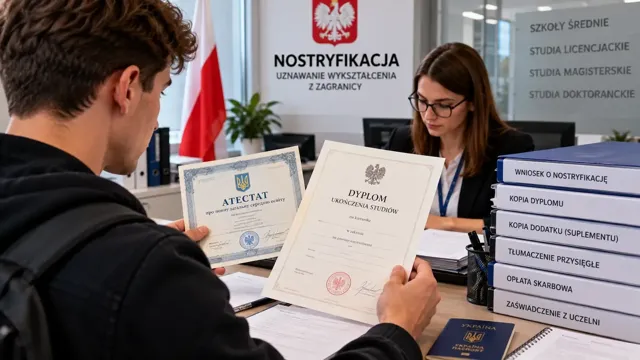
Recognising a school certificate or diploma in Poland: when you need nostrification

Public universities in Poland: who studies for free, what foreigners pay and how to get in
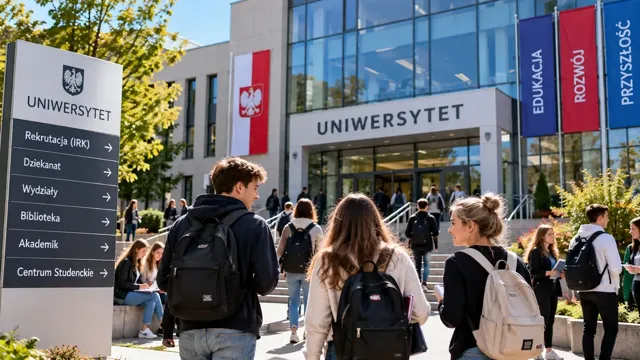
Applying to a Polish university through IRK: a step-by-step guide