Applying to a Polish university through IRK: a step-by-step guide
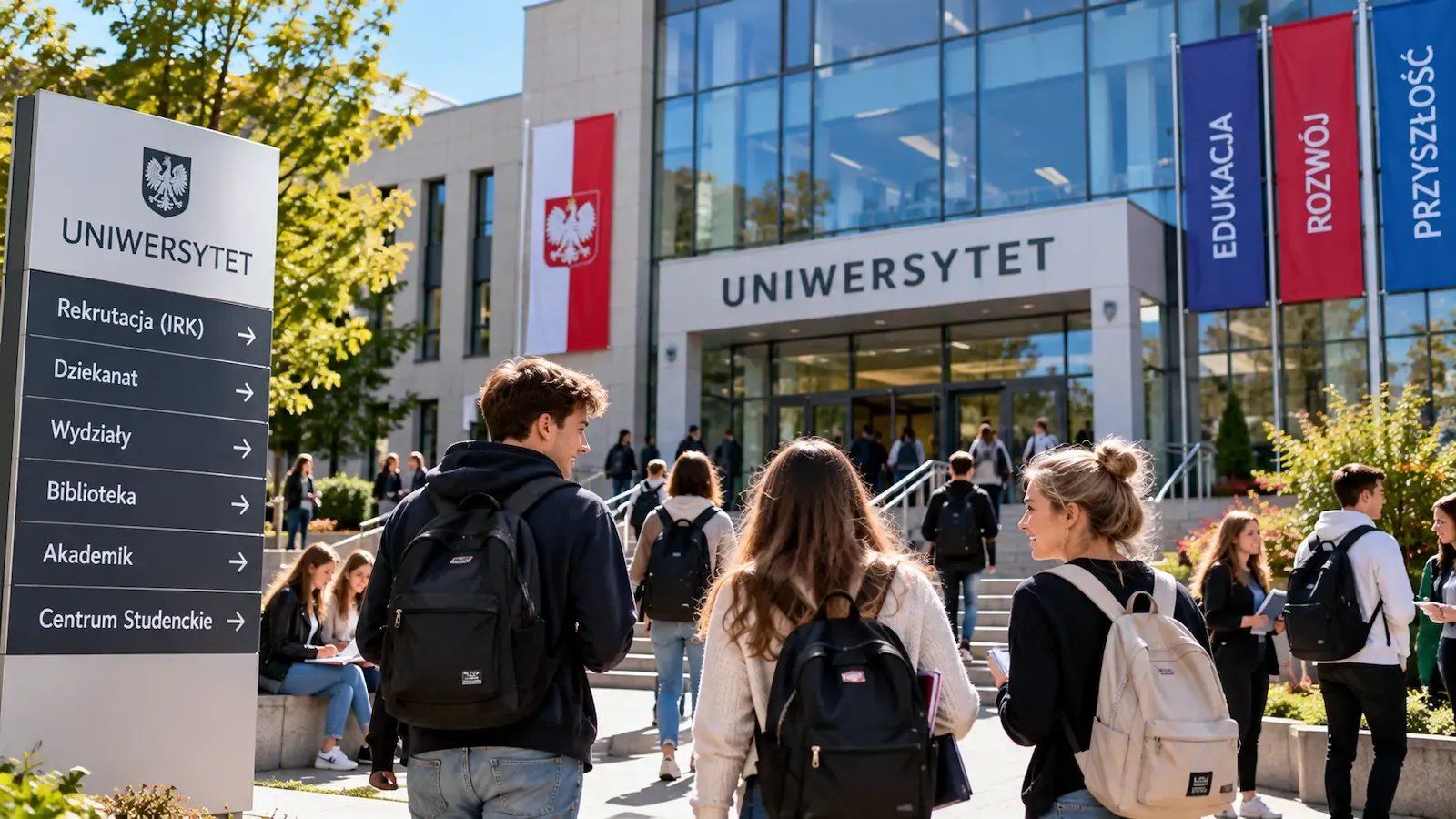

Every summer Polish universities accept thousands of applications through IRK — Internetowa Rejestracja Kandydatów (online candidate registration). And every summer some foreign applicants drop out of the competition not because of weak grades but because of small things: they didn't pay the registration fee before the deadline, didn't bring the originals in time, didn't notice the language certificate had to be uploaded in advance.
A common belief is that IRK is a single national system, like the admissions campaigns in some other countries. It isn't. Every university has its own IRK with its own deadlines, grade conversion rules and document lists. Apply to three universities and you go through three separate registrations. Here's how it works step by step.
Step 0. Find out on what terms you're applying
This decides whether your studies will be free:
- On the same terms as Poles. Holders of Karta Polaka, karta stałego pobytu, EU long-term resident status and some other groups. Polish-taught study at public universities is free.
- Paid study. Foreigners without such grounds usually pay — even for studies in Polish.
- Ukrainian citizens. Special rules have applied to them — check the current situation on the university's website.
Step 1. Registering in IRK
- Account. Create an account on the chosen university's IRK site.
- Personal data. As in your passport, in Latin script. A mistake here later carries over to your student ID and diploma.
- Photo. Upload a photo meeting the requirements — it goes on your student ID.
- Education. State which certificate you have: Polish matura or a foreign document.
Step 2. Choosing programmes and paying
Within one university you can apply for several programmes. A separate registration fee is paid for each — small, but without it your application doesn't enter the competition. The amount is shown in IRK. Payment must arrive before the deadline, and a bank transfer from abroad can take several days — pay early.
Step 3. Grades and conversion
Polish universities admit on matura results. Grades from a foreign certificate are converted into points under the specific university's rules — conversion tables are published in the admission rules (uchwała rekrutacyjna). Some programmes have extra exams or interviews: creative, language or subject-based.
Read carefully which subjects count for your programme. A high overall grade won't help if the programme counts maths and your certificate doesn't have it.
Step 4. Language of study
- In Polish. You usually need proof of Polish — often at B2 level: a state certificate, a Polish school, or an exam at the university.
- In English. An English certificate (the level and accepted exams are set by the university).
Step 5. Lists and documents
After registration closes, the university publishes lists: zakwalifikowani (qualified for admission) and rezerwowa (reserve). If you're on the first list, you must bring or send your documents on set days. Miss them and the place goes to the next person.
- School certificate — original or certified copy, with an apostille and sworn translation.
- Language certificate.
- Passport and proof of stay in Poland, if you have it.
- Health insurance — mandatory for some foreigners.
- Medical certificate — for some programmes (medicine, sport).
- Signed application and, for paid study, the contract.
Deadlines: what to watch
The main intake for the winter semester usually runs from June to July, with additional rounds in September if places remain. For foreigners on paid programmes, universities often open admissions earlier, because a visa takes time. Put every IRK date in your calendar: registration, payment, list announcements, document submission.
If you didn't get in
Don't give up: watch the reserve lists — in the first weeks after they're announced some people don't bring their documents and places free up. Check the additional intake in September at the same or another university. And if it doesn't work out this year, use the year to bring your Polish up to a B2 certificate — next summer you'll be in a much stronger position.
After admission
You receive an admission decision (decyzja o przyjęciu) — an important document for a visa or a study-based residence card. Then comes ślubowanie (the student oath), your student ID and, for foreigners, registering your stay and health insurance.
IRK application checklist
- Terms. Find out whether you'll study free or paid.
- Accounts. Register separately in each university's IRK.
- Payment. Pay fees early, allowing for transfer time.
- Subjects. Check which grades count for your programme.
- Language. Have your certificate ready before the deadline.
- Calendar. Note every date — especially document submission after the lists.
Subscribe to our newsletter:
Latest Posts:
Latest Posts:

Personal pronouns in Polish: go or jego, cię or ciebie, do niego, z nią
Verbs and their cases in Polish: szukam pracy, pomagam koledze, czekam na autobus

Addressing people in Polish: Panie Marku, Pani Anno, Aniu — the vocative
Comparatives and superlatives in Polish: lepszy, tańszy, najlepszy, im więcej — tym więcej