Citizenship and permanent residence in Poland 2026: what has and has not changed
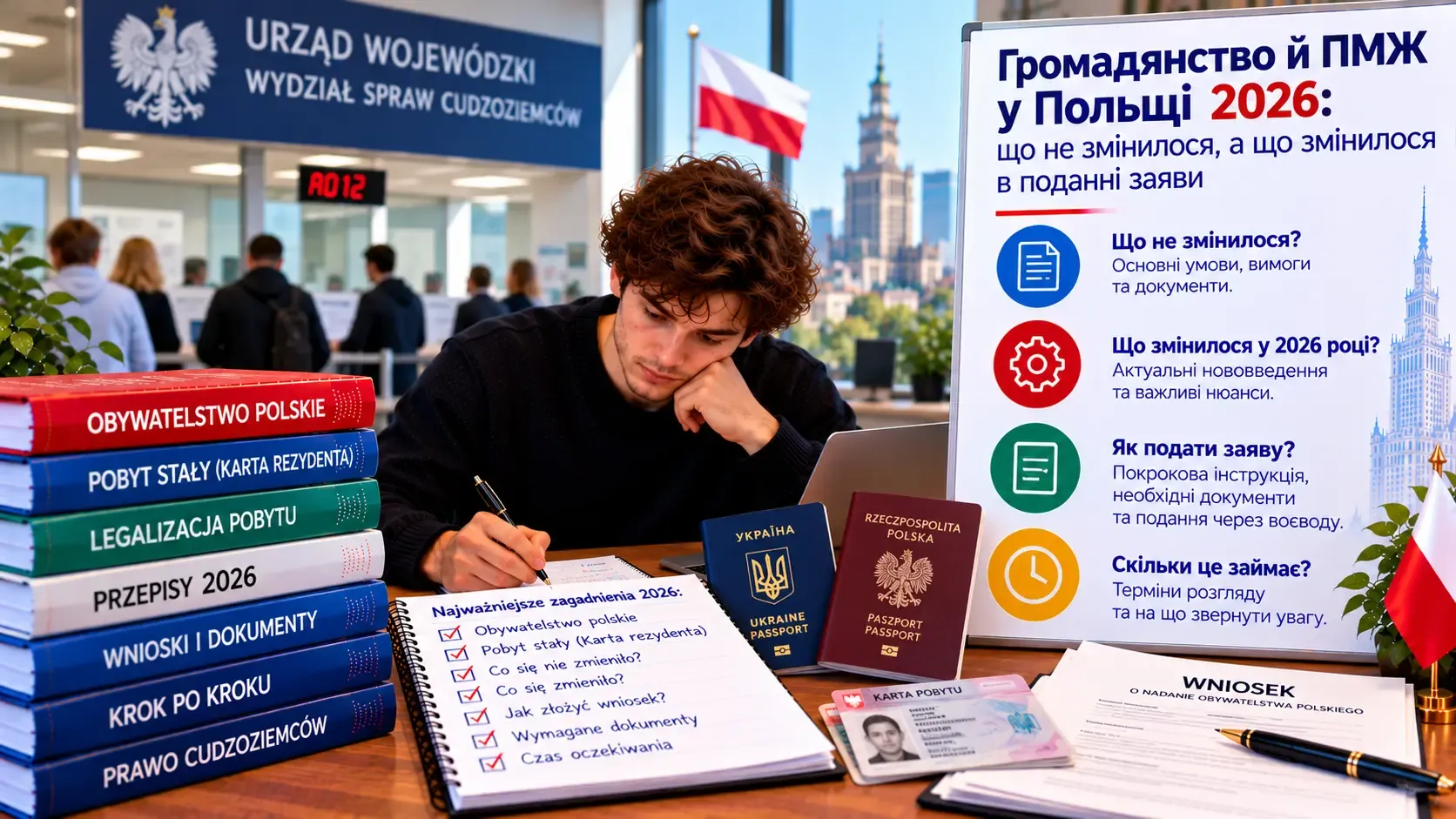

In October 2026 rumours are going round again among foreigners in Poland: "citizenship will become unattainable", "C1 is needed", "ten years of waiting". We checked what of this is true. The short answer: the Sejm rejected the strict bill, the main conditions for obtaining citizenship remain as before, but the procedure for applying for permanent residence (pobyt stały) changed in 2026. Let us see what exactly, from open sources as of 22 October 2026.
What about the strict citizenship bill
On 9 January 2026 the Sejm in first reading rejected an MPs' bill to amend the citizenship law. It proposed much stricter rules: to extend the residence period from three to ten years, to raise the Polish language requirement to C1 and to introduce a compulsory exam on history and culture (Sejm print no. 1888). Since the bill was rejected it did not become law. This means the current rules have not changed: according to legal outlets the required period of uninterrupted residence on the basis of a permanent residence card or long-term EU resident status remains generally three years.
What is required now (in general terms)
- Uninterrupted residence in Poland on the basis of permanent residence or long-term EU resident status for a set time (as a rule three years).
- Confirmation of knowledge of Polish: in practice a certificate under the state system, most often at B1.
- A lawful source of income and housing.
- No threat to state security and no convictions that stand in the way.
- Documents on identity and origin, translations and legalisation where needed.
This is a general overview: each case is considered individually, and the list of documents and conditions must be checked against official pages and a lawyer.
What changed in the permanent residence procedure
According to legal reviews the act of 21 November 2025 amending the act on foreigners was adopted with the Senate's amendments, and the procedures for legalising residence were clarified as to deadlines and formal requirements of applications. The Ministry of the Interior's regulation on the application for permanent residence was issued on 2 April 2026 and came into force on 27 April 2026. It was earlier reported that the form of the application for permanent residence was planned to be available only electronically. This information comes from a February publication, so whether it was finally adopted should be checked in the Journal of Laws (ELI) and on the pages of the MSWiA or the Office for Foreigners.
What it means for an applicant
- Electronic filing. Prepare an electronic signature or a trusted profile in advance and create an account in the MOS system.
- Attention to deadlines. The new norms clarify deadlines and requirements: a missed date or insufficient document can cost a refusal.
- An old application does not vanish automatically. If you already filed under the previous procedure, clarify at the voivodeship whether anything extra is required.
The difference between permanent residence and citizenship
- Permanent residence (pobyt stały). The right to live in Poland without a time limit, with some exceptions. The card is valid for ten years and is renewed.
- Long-term EU resident status. Gives the right to live in Poland and in some cases to move to another EU country on certain terms.
- Citizenship. A Polish passport, the right to vote, no restrictions on residence and work in the EU. Obtained under a separate procedure and requires a language certificate.
Which mistakes most often lead to refusal
- Gaps in residence (long trips) or unproven uninterrupted residence.
- Insufficient income or unstable sources.
- Incomplete documents, no apostille or translation.
- Errors in the application or a late answer to a request to supplement documents.
- Doubts about the genuineness of the grounds (for example a sham relationship or sham work).
How to prepare
- Check on what basis you live in Poland and how long it has lasted uninterrupted.
- Draw up a timeline of your presence: contracts, rent, travel passes, statements.
- Prepare documents on income and housing, contracts, certificates from work.
- Start preparing for a Polish certificate: B1 for citizenship, and some kinds of permits need a higher level.
- Have translations and apostilles of documents made in advance.
- Follow changes on the MSWiA, voivodeship and UdSC sites.
What about other draft changes
Polish politicians periodically propose tightening the rules for foreigners: lengthening periods, raising language requirements, complicating procedures. The rejection of one bill does not mean new ones will not appear, so if you already meet the requirements do not delay filing. It is also useful to learn the language in advance: the selection of our articles in the "Dictionary" rubric and on Polish rules will help you prepare for the exam.
Useful Polish words
- pobyt stały — permanent residence.
- obywatelstwo polskie — Polish citizenship.
- rezydent długoterminowy UE — a long-term EU resident.
- certyfikat znajomości języka polskiego — a Polish language certificate.
- wniosek / odmowa / decyzja — an application / a refusal / a decision.
Summary
There are so far no strict changes on citizenship: the bill with ten years and level C1 was rejected by the Sejm, and the current conditions are still three-year. The procedure for filing for permanent residence has changed, or rather been clarified, and it is worth preparing it in electronic form. The information is given from open sources as of 22 October 2026; laws and regulations change, so before filing check the conditions against the Journal of Laws, the MSWiA and the voivodeship office or consult a lawyer.
Subscribe to our newsletter:
Latest Posts:
Latest Posts:
Personal pronouns in Polish: go or jego, cię or ciebie, do niego, z nią
Verbs and their cases in Polish: szukam pracy, pomagam koledze, czekam na autobus
Addressing people in Polish: Panie Marku, Pani Anno, Aniu — the vocative
Comparatives and superlatives in Polish: lepszy, tańszy, najlepszy, im więcej — tym więcej