BHP technician in Poland: 18 months of study, an exam and a career in workplace safety
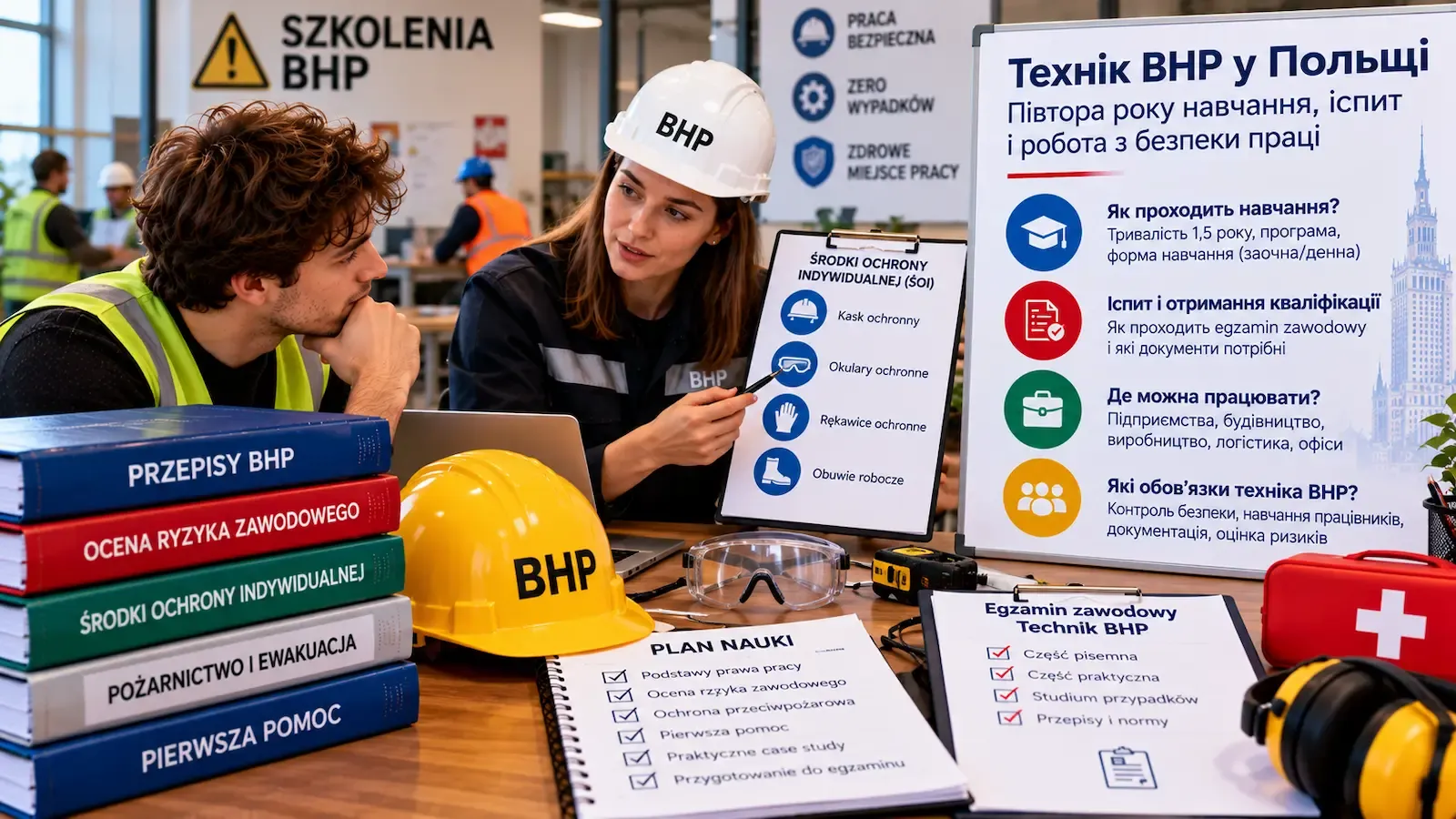

Volodymyr spent seven years on Polish building sites — first as a labourer, then as a foreman. In that time he saw dozens of inspections, falls from scaffolding and fines for missing helmets. Once a BHP inspector, watching Volodymyr explain the rules to his crew in Ukrainian, said: "You should be doing this yourself." Eighteen months later Volodymyr had a BHP technician's diploma.
A common belief is that BHP (workplace health and safety) is just boring box-ticking briefings, and only a Pole with a degree can work in the field. In fact, BHP technician is a profession with its own state qualification that you can get at a szkoła policealna. And a foreigner with experience in production or construction often has an advantage: they know how crews really work and can talk to workers in their language.
What a BHP technician does
- Risk assessment. Analysing workplaces, identifying hazards, preparing occupational risk assessment documents.
- Inspection. Checking compliance with safety rules, protective equipment and the condition of machinery.
- Accidents. Taking part in investigating workplace accidents and preparing reports.
- Training staff. Briefings for new employees and suggestions for improving working conditions.
How the course works
- Length. Usually 1.5 years — three semesters.
- Mode. Most often weekend study, so you don't have to quit your job.
- Cost. Free in public and some non-public schools, provided you attend regularly.
- Programme. Labour law, ergonomics, fire safety, first aid, risk assessment, safety in various types of work, plus a placement at a company.
Exam and qualification
The course ends with a state vocational exam at the OKE with written and practical parts. Check the qualification code and exact exam format on your school's or OKE's website — vocational programmes in Poland are updated periodically. After passing you receive a BHP technician's diploma.
How much Polish you need
More than for many other professions. A BHP technician writes reports, instructions and risk assessment documents and runs briefings. So a realistic level is a confident B2, especially in writing. The good news: BHP terminology is fairly limited, and you can master it in eighteen months of study. Knowing Ukrainian or Russian is a plus at companies with many foreign workers.
Where to work
Polish rules require employers to have a BHP service or assign its duties to a qualified person — obligations depend on the number of employees and the level of risk. So BHP technicians are hired by:
- Manufacturers — factories, logistics centres, warehouses.
- Construction companies — where building-site experience is especially valuable.
- BHP outsourcing firms — serving several small companies at once.
- Employment agencies — with many foreign workers.
Some positions require not only the diploma but also a certain amount of experience in a BHP service. Senior positions, for example, often call for several years. A beginner can realistically start as an inspector or assistant.
How to progress
- Experience. Every year in a BHP service opens up higher positions.
- Higher education. A degree in occupational safety or postgraduate BHP studies gives access to specialist and senior specialist posts.
- Extra qualifications. Fire safety, first aid, auditing of safety management systems.
- Self-employment. Some specialists work B2B, serving small firms.
Who this profession suits
People who can both explain and insist, because a BHP technician sometimes has to say "no" even to managers — and then fill in a lot of paperwork. If you're comfortable with documents and not afraid of conflict for the sake of safety, it's a good route from physical work to a mix of office and field work. And the experience from a building site or warehouse that once seemed like just "hard work" becomes your professional advantage here.
Checklist before enrolling
- Polish. Assess your writing level — you'll need a lot of it.
- School. Check the school is authorised to teach this profession and how it arranges placements.
- Mode. Weekend study if you work; get the full-year schedule.
- Certificate. Ask whether your school certificate needs recognition.
- Experience. Describe your production or construction experience — it helps when job hunting.
- Plan. Consider whether you'll go on to university to grow into a specialist.
Subscribe to our newsletter:
Latest Posts:
Latest Posts:

Personal pronouns in Polish: go or jego, cię or ciebie, do niego, z nią
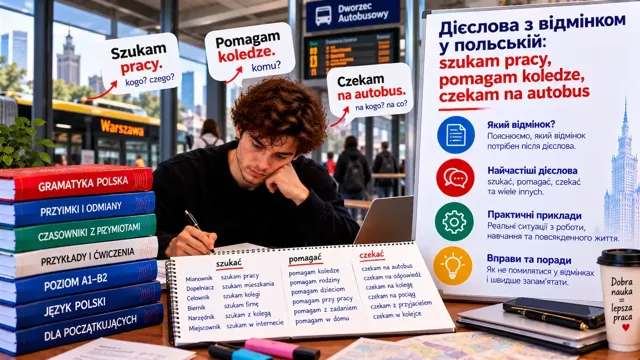
Verbs and their cases in Polish: szukam pracy, pomagam koledze, czekam na autobus

Addressing people in Polish: Panie Marku, Pani Anno, Aniu — the vocative
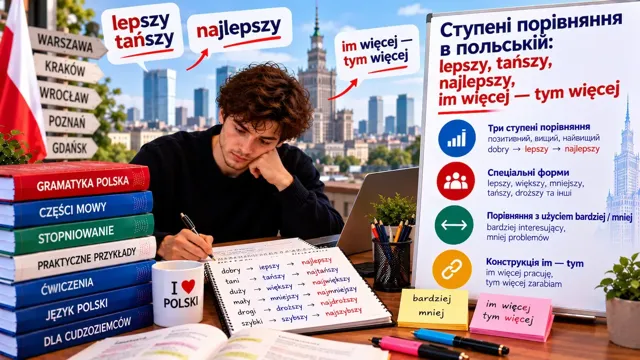
Comparatives and superlatives in Polish: lepszy, tańszy, najlepszy, im więcej — tym więcej