B2 Polish listening: how to train your ear for the exam
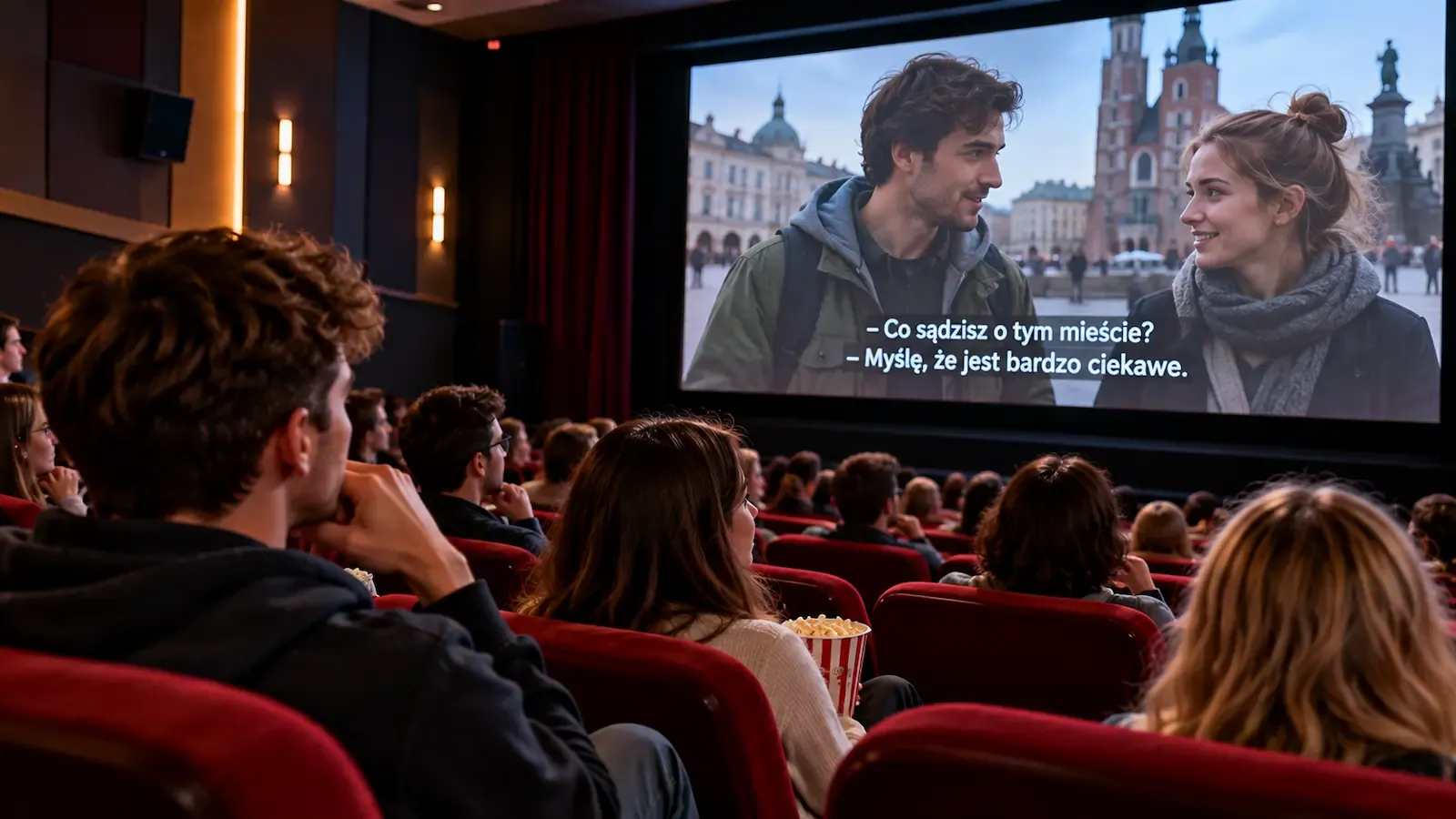
Serhiy has lived in Wrocław for three years, chats freely with colleagues and felt confident before his B2 exam. In the listening section he was thrown: the presenter spoke fast, the recording had an interviewer and a guest talking over each other, and the questions weren't about "what's the conversation about" but small details and shades of opinion.
A common belief: if you live in Poland, you'll pass listening automatically. In fact everyday understanding and exam understanding are different skills. In life you understand from context, can ask again, see the speaker's face. In the exam there's only a recording, harder vocabulary, and tasks where the right answer is often hidden behind similar-sounding "traps". This needs separate training.
What you'll usually hear at B2
At B2 the recordings are longer and more natural than at B1: interviews, radio reports, extracts from discussions, announcements, lectures. Native speed, with the usual repetitions and self-corrections. Check in the current official sample tests how many times each recording is played and which task types are used — your tactics depend on it.
What to listen to for practice
- Polish radio. News and talk programmes — natural pace, different voices, current topics.
- Podcasts. Conversational podcasts about society, science, history — similar to exam interviews.
- News with subtitles. Short news items where you can check what you heard against the text.
- Podcasts for learners of Polish. Good for warming up but slower than the exam — don't stop there.
Vary voices and genres: male and female, young and older, fast and slow. In the exam you don't choose the speaker, so the wider your range in practice, the fewer surprises. It also helps to listen to interviews with people from different parts of Poland — with local accents.
Technique 1. Listening with a purpose
Before each recording, set yourself a specific task: "find the guest's three arguments", "note all numbers and dates", "work out what the host disagrees with". That way you train exactly what the exam tests — selective understanding, not a general impression.
Technique 2. Dictation
Take a 30–60-second extract and write it down word for word, pausing as you go. Then compare it with a transcript. Your mistakes show what you don't hear: endings, short function words, words merging in fast speech. It's the most boring exercise but the most effective — 10 minutes twice a week gives noticeable results within a month.
Technique 3. Shadowing
Listen and repeat after the speaker almost simultaneously, half a second behind, copying the pace and intonation. First with the text in front of you, then without it. Shadowing trains both listening and pronunciation: your brain gets used to the rhythm of Polish, and fast speech stops "blurring".
Technique 4. Dealing with traps
In exam tasks the wrong options often contain words that really do occur in the recording, but in a different meaning or with a negation. For example, the recording says: "Nie twierdzę, że praca zdalna jest zła" (I'm not saying remote work is bad), and an option says: "Mówca uważa, że praca zdalna jest zła" (The speaker thinks remote work is bad). Same words, different meaning. Practise on sample tests and after each mistake work out which trap you fell into.
Tactics in the exam
- Read the questions before the recording. Underline key words — you'll know what to listen for.
- Don't get stuck. Missed an answer? Move on to the next question rather than trying to recall it.
- Synonyms. The question will rarely use the same word as the recording; listen for meaning.
- Negations. Watch for "nie", "wcale", "ani", "jednak".
A six-week plan
- Weeks 1–2. 15 minutes of radio or podcasts daily, listening with a purpose; dictation twice a week.
- Weeks 3–4. Add 10 minutes of shadowing; one sample test a week.
- Weeks 5–6. Two timed sample tests a week, analysing every mistake; keep up daily listening.
Listening prep checklist
- Format. Check in the samples how many times recordings are played.
- Daily. 15 minutes of real Polish with a specific task.
- Dictation. Twice a week for 10 minutes.
- Shadowing. Repeat after the speaker for rhythm and pronunciation.
- Traps. Analyse every mistake in tests.
- Tactics. Read questions before the recording and don't get stuck on a missed one.
Subscribe to our newsletter:
Latest Posts:
Latest Posts:
Personal pronouns in Polish: go or jego, cię or ciebie, do niego, z nią
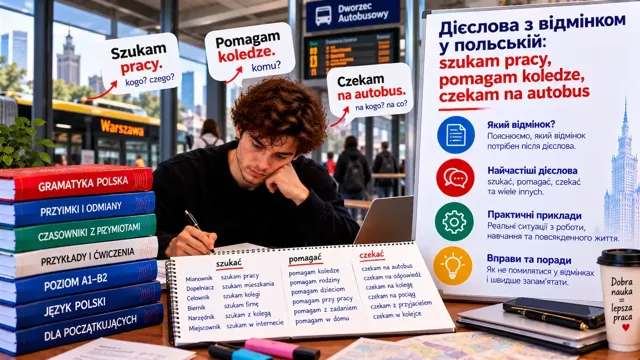
Verbs and their cases in Polish: szukam pracy, pomagam koledze, czekam na autobus

Addressing people in Polish: Panie Marku, Pani Anno, Aniu — the vocative
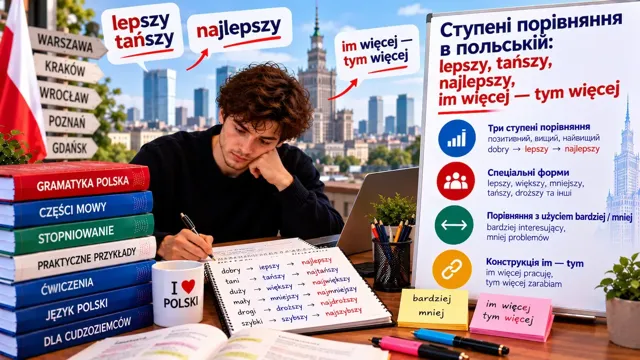
Comparatives and superlatives in Polish: lepszy, tańszy, najlepszy, im więcej — tym więcej