Polish state exam B1: how it works and how to pass it the first time
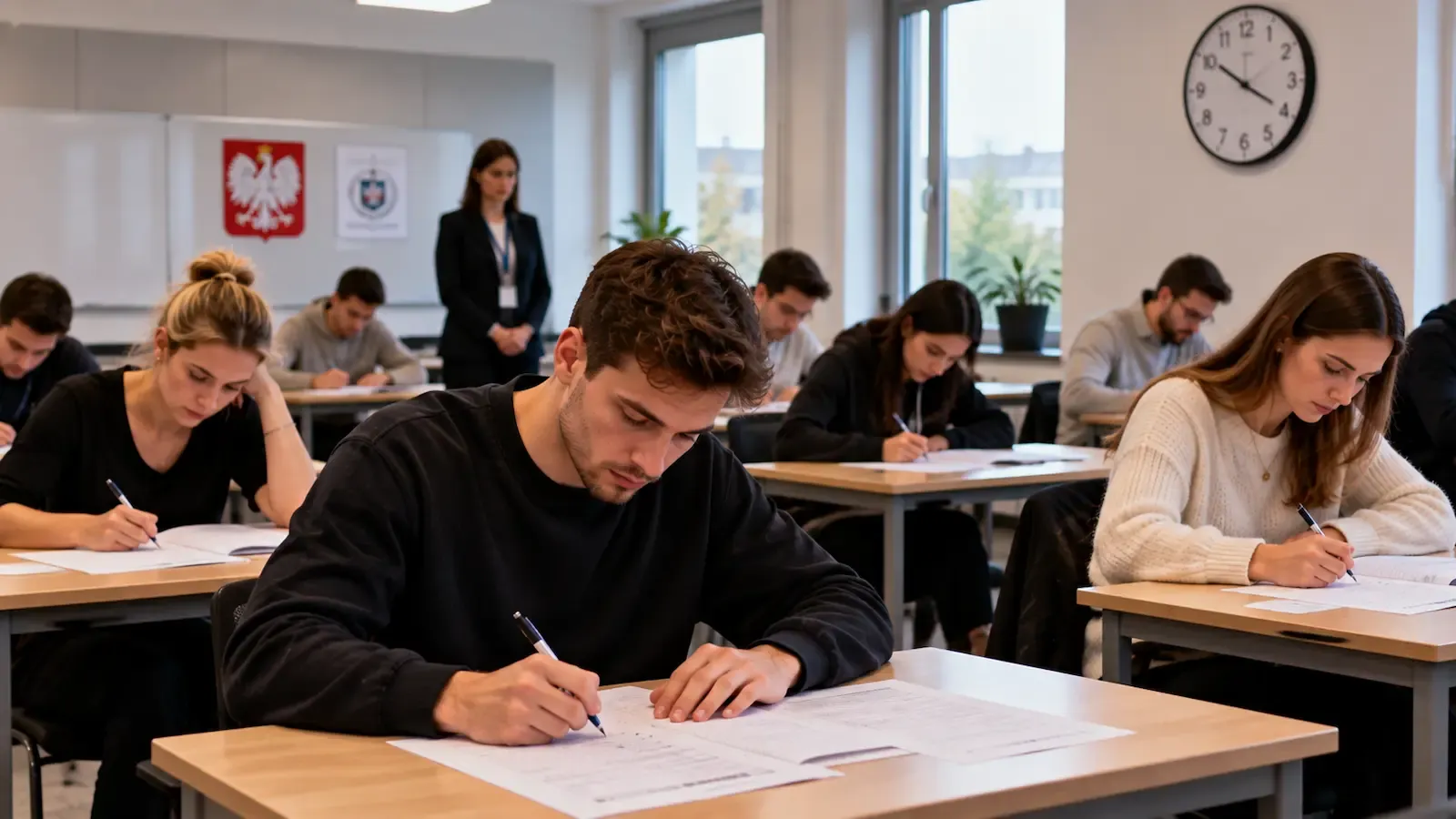

Some believe B1 is a "conversational level", so if you've been speaking Polish at work for a few years you'll pass without preparation. That's not so. What fails most people isn't speaking but the grammar part: cases, verb aspects and agreement that nobody notices in live conversation, while the test counts every mistake.
Who needs a B1 certificate
- For citizenship — when being recognised as a citizen by the voivode.
- For EU long-term resident status.
- For work — some employers require proof of language for jobs involving paperwork or customers.
The certificate never expires: pass once and it's valid for life.
Exam structure
The exam has five parts:
- Rozumienie ze słuchu — listening: announcements, dialogues, short broadcasts.
- Rozumienie tekstów pisanych — reading: notices, letters, articles.
- Poprawność gramatyczna — grammar: filling in correct forms, choosing cases and verb aspects.
- Pisanie — writing: a letter or message on a given topic.
- Mówienie — speaking: a conversation with examiners, describing a situation, giving an opinion.
You need at least 50% in each part. A high speaking score won't make up for failed grammar — no certificate.
How to register
The exams are run by the state commission for certifying proficiency in Polish as a foreign language; registration is on the official certificate exam website. Sessions take place several times a year in various Polish cities and abroad. Register two or three months ahead: places in popular centres fill up fast. The fee is fixed, and its current amount is shown on the website during registration.
Where people lose points most often
- Cases after numerals — "dwa domy" but "pięć domów".
- Verb aspect — "robiłem" and "zrobiłem" mean different things, and the examiner will notice.
- Masculine-personal form — "byli", "zrobili" only for groups that include men.
- Formal letter — the greeting "Szanowni Państwo" and the closing "Z poważaniem" must be there.
- Timed reading — good readers run out of time because they read every text twice.
How long to prepare
If you speak Polish every day, 2–3 months of focused preparation is usually enough: grammar tests, a few letters a week, timed listening practice. Starting from zero, reaching B1 takes about a year of regular classes.
Preparation checklist
- Mock test. Work through the official sample tasks — they are publicly available.
- Grammar. 20–30 minutes of case and aspect exercises every day.
- Writing. 2–3 letters a week, checked by a teacher or native speaker.
- Listening. Polish radio or podcasts with a timer, noting key words.
- Speaking. Practise describing pictures and giving a 2–3 minute opinion.
- ID on exam day. Passport or residence card — without it you won't be admitted.
Subscribe to our newsletter:
Latest Posts:
Latest Posts:
Personal pronouns in Polish: go or jego, cię or ciebie, do niego, z nią
Verbs and their cases in Polish: szukam pracy, pomagam koledze, czekam na autobus

Addressing people in Polish: Panie Marku, Pani Anno, Aniu — the vocative
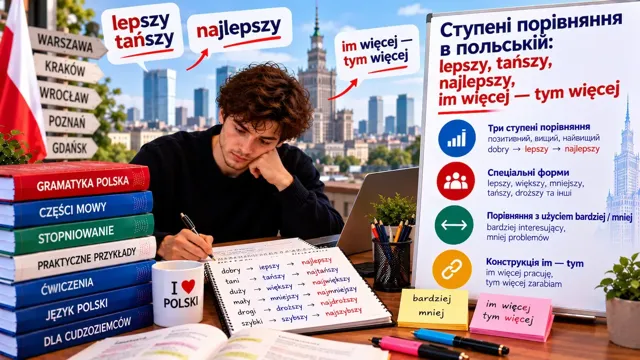
Comparatives and superlatives in Polish: lepszy, tańszy, najlepszy, im więcej — tym więcej