The letter on the B1 Polish exam: structure, ready phrases and mistakes
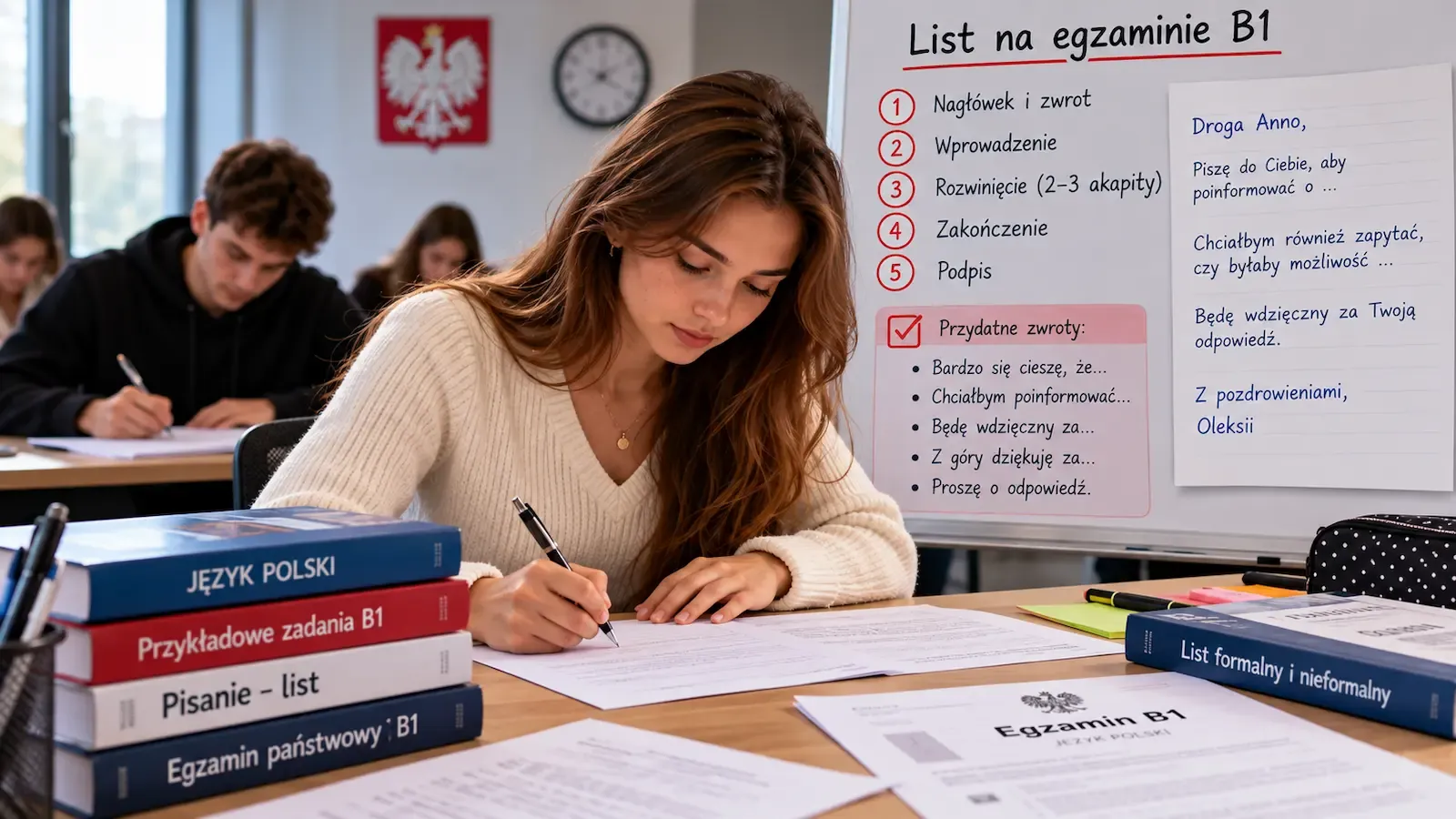

On a mock exam Oleh scored less than half the points for writing, although his grammar was decent. The reason turned out to be simple: he wrote a formal letter to his building management as if writing to a friend. "Cześć, mam problem z kaloryferem" — and then informal "you" throughout. The content was right, the tone wasn't.
Some believe the main thing at B1 is to avoid grammar mistakes. In fact the writing part is assessed on several things at once: whether you completed the task, chose the right style, wrote a coherent text, used varied vocabulary — and only then grammar. A letter with a few small mistakes but the right tone and every point of the task often scores higher than a flawless one that misses the point.
What the task requires
The B1 writing part usually includes a letter — formal or informal — and another, shorter task. Check the exact format and word limits in the current sample tests on the state exam website. The most important rule: cover every point listed in the task. If it says "explain the reason, suggest a solution and ask for a reply", all three must be in your letter.
A formal letter: structure
- Greeting. "Szanowni Państwo," — if you don't know the addressee; "Szanowna Pani," / "Szanowny Panie," — to a specific person.
- Purpose. "Piszę, ponieważ…", "Zwracam się z prośbą o…" — I'm writing because…, I'm writing to ask for…
- Details. What happened, when, why it matters.
- Request or proposal. "Bardzo proszę o…", "Czy byłoby możliwe…?"
- Closing. "Z góry dziękuję za odpowiedź." — Thank you in advance for your reply. "Z poważaniem," — Yours faithfully, + name.
An informal letter: structure
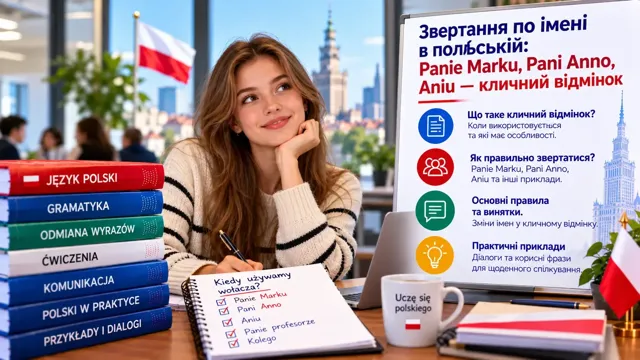
- Greeting. "Cześć Kasiu!", "Droga Kasiu," — note the vocative case: Kasia → Kasiu, Marek → Marku.
- Opening. "Dziękuję za Twój list", "Dawno się nie odzywałem / odzywałam…" — Thanks for your letter, I haven't been in touch for ages…
- Main part. News, an invitation, advice — as the task requires.
- Closing. "Napisz, co u Ciebie", "Pozdrawiam serdecznie", "Ściskam" — Write and tell me how you are, Warm regards, Hugs, + name.
In letters, pronouns referring to the addressee are capitalised: "Ty", "Ciebie", "Twój", "Pan", "Państwo". It's a sign of politeness, and examiners notice it.
Phrases for typical situations
- Complaint: "Niestety muszę złożyć reklamację, ponieważ…" — Unfortunately I must make a complaint because…
- Asking for information: "Chciałbym / chciałabym dowiedzieć się, czy…" — I'd like to find out whether…
- Invitation: "Chciałbym Cię zaprosić na…" — I'd like to invite you to…
- Apology: "Przepraszam, że tak późno odpisuję" — Sorry for replying so late.
- Advice: "Na Twoim miejscu…", "Radzę Ci…" — If I were you…, I advise you…
Example: a short formal letter
Szanowni Państwo,
piszę, ponieważ od tygodnia w moim mieszkaniu przy ul. Polnej 5 nie działa ogrzewanie. Zgłaszałem ten problem telefonicznie, ale nikt nie przyszedł. Bardzo proszę o pilne wysłanie technika. Jestem w domu codziennie po godzinie 16.
Z góry dziękuję za odpowiedź. Z poważaniem, Oleg Kowal
Note that after the comma in the greeting the letter continues with a lower-case letter — "piszę", not "Piszę". The letter has everything needed: the reason, details, a request and a polite closing.
The most common mistakes
- Mixed style. Starting with "Szanowni Państwo" and ending with "Buziaki" (kisses).
- Missing task points. The most expensive mistake — lost content points.
- Too few or too many words. Stick to the limit in the task.
- Vocative. "Droga Kasia" instead of "Droga Kasiu".
- Literal translations. "Dziękuję za uwagę" (thank you for your attention) at the end of a letter sounds like the end of a presentation.
- Repetition. "Bardzo" five times — swap in "naprawdę", "szczególnie", "niezwykle".
How to practise
Write two letters of each type a week from sample tasks — and be sure to have someone with good Polish check them, or compare them with model answers. Make yourself a "cheat sheet" of 15–20 opening and closing phrases — in the exam they should come automatically so all your attention goes to content.
Checklist before the writing part
- Task. Underline every point and tick each one off in your text.
- Style. Formal or informal — and keep it to the end.
- Greeting. Check the vocative form of the name.
- Capitals. Ty, Ciebie, Pan, Państwo.
- Length. Count your words.
- Proofreading. Leave 5 minutes to reread.
Subscribe to our newsletter:
Latest Posts:
Latest Posts:
Personal pronouns in Polish: go or jego, cię or ciebie, do niego, z nią
Verbs and their cases in Polish: szukam pracy, pomagam koledze, czekam na autobus
Addressing people in Polish: Panie Marku, Pani Anno, Aniu — the vocative
Comparatives and superlatives in Polish: lepszy, tańszy, najlepszy, im więcej — tym więcej