The B1 Polish exam speaking part: tasks, sample answers and mistakes
Natalia did well on tests and read confidently, but the night before the B1 speaking part she barely slept. "I understand everything, but the moment I have to speak, my head goes blank," she says. The first minutes of the exam really were hard. Then she remembered a few prepared phrases, and the conversation got going.
A common belief is that you can't prepare for the speaking part because "you don't know what they'll ask". In fact B1 topics are fairly predictable: daily life, work, study, shopping, health, travel, plans. Most importantly, examiners assess not encyclopaedic knowledge but your ability to express yourself clearly and keep a conversation going. That can be learned.
What the speaking part looks like
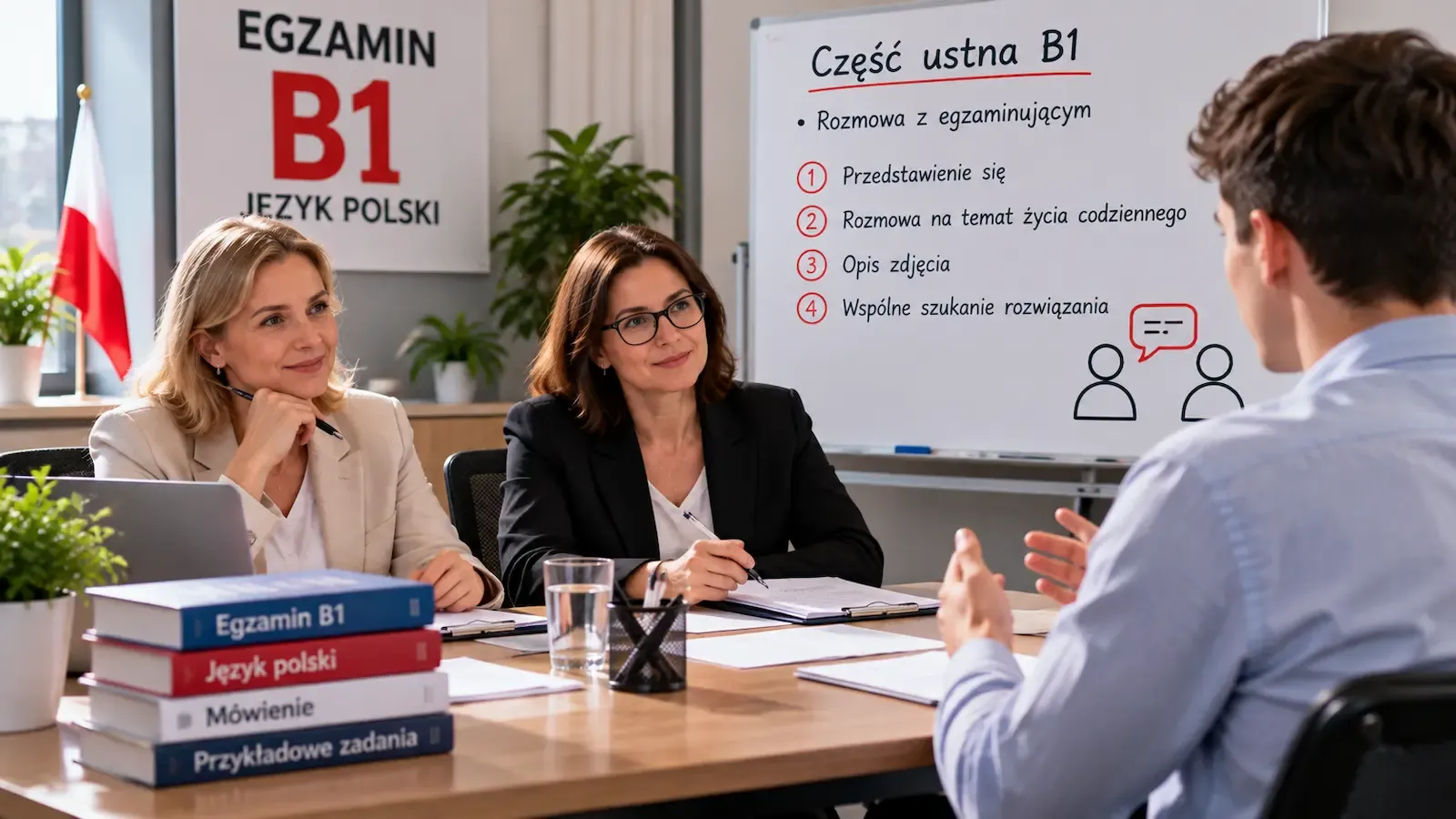
The speaking part takes place with two examiners and consists of several tasks. The exact format may change over time, so be sure to look at the current sample tasks on the official state certificate exam website. In general, at B1 you'll meet these types:
- A short introduction. A few questions about you: where you're from, what you do, how long you've been in Poland.
- A role play. A dialogue in a typical situation: in a shop, a pharmacy, an office, with a landlord.
- Speaking on a topic or about a picture. Describing an image, comparing, giving your opinion on an everyday topic.
Introduction: prepare 6–8 sentences
This is the easiest part, and nerves make people fail it most often. Prepare your answer in advance:
- "Nazywam się…, pochodzę z…" — My name is…, I'm from…
- "W Polsce mieszkam od trzech lat" — I've lived in Poland for three years.
- "Pracuję jako… w firmie…" — I work as… at…
- "Uczę się polskiego, bo…" — I'm learning Polish because…
- "W wolnym czasie lubię…" — In my free time I like…
Role play: the key is to react
The examiner plays a shop assistant, doctor or neighbour. You're not expected to have perfect grammar, but to react naturally: greet, explain a problem, ask a question, agree or disagree, say thank you. Useful phrases:
- "Mam problem z…" — I have a problem with…
- "Chciałbym / chciałabym zapytać o…" — I'd like to ask about… (man / woman)
- "Czy byłoby możliwe…?" — Would it be possible…?
- "Rozumiem, ale…" — I understand, but…
- "W takim razie…" — In that case…
Describing a picture: a pattern that always works
- Overview. "Na zdjęciu widzę…" — In the photo I can see…
- Details. "Na pierwszym planie…, w tle…" — In the foreground…, in the background…
- A guess. "Wydaje mi się, że…", "Prawdopodobnie…" — It seems to me that…, Probably…
- Link to you. "To przypomina mi…", "Ja też czasem…" — It reminds me of…, I sometimes… too.
Giving your opinion
- Start: "Moim zdaniem…", "Uważam, że…" — In my opinion…, I think that…
- Argument: "Po pierwsze…, po drugie…" — Firstly…, secondly…
- Example: "Na przykład w mojej pracy…" — For example, at my work…
- Other side: "Z drugiej strony…" — On the other hand…
- Conclude: "Dlatego myślę, że…" — That's why I think…
Common mistakes
- Silence. A 10-second pause is worse than a mistake. If you forget a word, describe it: "to taka rzecz, której używamy do…" — it's a thing we use for…
- One-word answers. "Tak", "nie", "lubię" isn't enough. Add "bo…" and an example.
- Mixing ty / Pan. Address the examiner as "Pan / Pani"; in the role play, as the situation requires.
- Gender in the past tense. "Byłem" or "byłam" — watch your gender.
- Calques from English. "Mam dwadzieścia lat" (I have twenty years) is correct; "jestem dwadzieścia lat" is not.
How to prepare in a month
Twice a week for 30 minutes, speak Polish on a typical topic and record yourself on your phone. Once a week, ask someone to do a role play with you. Describe 10 different pictures aloud — from magazines, the internet, the street. Listen to the recordings and note recurring mistakes — there are usually only a few, and they can be fixed in a month.
Checklist before the speaking part
- Samples. Look at the current sample tasks on the official website.
- Introduction. Learn a 6–8 sentence self-introduction.
- Description pattern. Overview — details — guess — link to you.
- Opinion phrases. Moim zdaniem, po pierwsze, z drugiej strony, dlatego.
- Recordings. At least 5 recordings of yourself before the exam.
- Calm. Mistakes are fine; silence isn't.
Subscribe to our newsletter:
Latest Posts:
Latest Posts:
Personal pronouns in Polish: go or jego, cię or ciebie, do niego, z nią
Verbs and their cases in Polish: szukam pracy, pomagam koledze, czekam na autobus
Addressing people in Polish: Panie Marku, Pani Anno, Aniu — the vocative
Comparatives and superlatives in Polish: lepszy, tańszy, najlepszy, im więcej — tym więcej