The little word się: how it works in Polish — nazywam się, uczę się, boję się
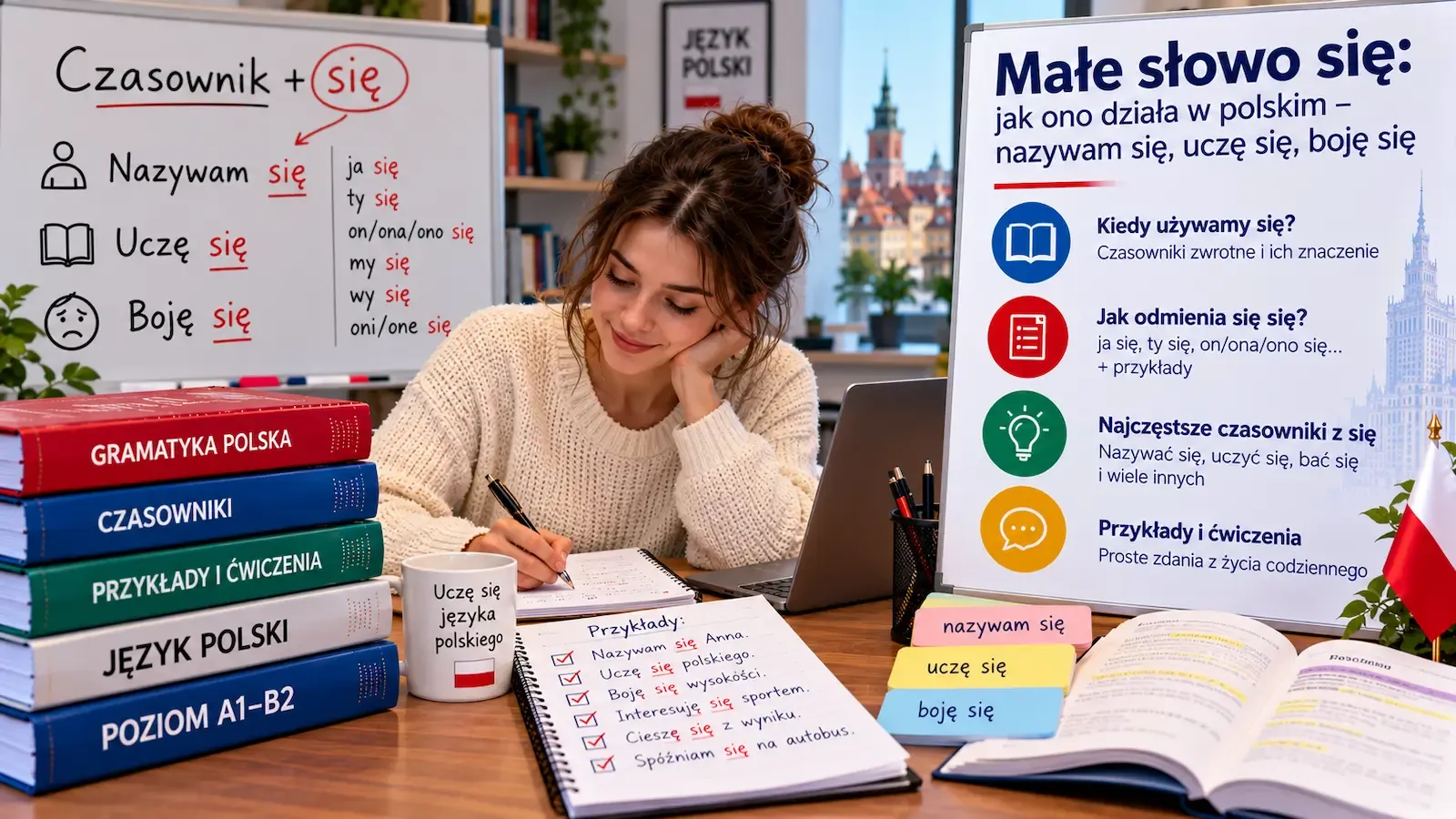

Of all the short words in Polish, się is the trickiest. English has "myself" and "oneself", but in Polish the little word się is used far more often, in places where English has no pronoun at all. In an interview someone says "Ja nazywam Piotr", and the recruiter immediately understands that the person learned Polish from a dictionary rather than from living conversation. Let us look at how this word works.
What się is
Się is a reflexive particle meaning that the action is directed at the person doing it. It does not change with person or number: both "ja uczę się" and "oni uczą się". Only the verb changes, and się always stays the same.
- Nazywam się Piotr. — My name is Piotr. (Literally: "I call myself".)
- Uczę się polskiego. — I'm learning Polish.
- Myję się rano. — I wash in the morning.
- Spieszę się do pracy. — I'm hurrying to work.
The particle depends on the verb
Some verbs in Polish do not exist without się, and in others się changes the meaning. Compare:
- uczyć — to teach someone: Uczę dzieci angielskiego. — I teach children English.
- uczyć się — to learn yourself: Uczę się polskiego. — I'm learning Polish.
- myć — to wash something: Myję samochód.
- myć się — to wash yourself: Myję się.
- widzieć — to see: Widzę brata.
- widzieć się — to see each other: Widzimy się jutro. — See you tomorrow.
Where się goes in the sentence
This is the most important practical rule: się cannot stand at the start of a sentence. It usually comes right after the verb or after the question word.
- Uczę się codziennie. — I study every day.
- Jak się nazywasz? — What's your name?
- Dlaczego się spóźniłeś? — Why were you late?
- Nie boję się pracy. — I'm not afraid of work.
In the past tense in speech the particle attaches to the verb: spóźniłem się, spóźniłam się, bałem się. In written Polish się spóźniłem is possible after a few words, depending on rhythm. To begin with we recommend a simple order: verb, then się.
Verbs with się followed by a particular case
A verb with się often requires not the accusative but another case. The most useful ones:
- uczyć się + genitive: uczę się polskiego, uczę się matematyki.
- bać się + genitive: boję się psa, boję się wysokości.
- interesować się + instrumental: interesuję się sportem, interesuję się muzyką.
- zajmować się + instrumental: zajmuję się magazynem.
- cieszyć się z + genitive: cieszę się z pracy.
- martwić się o + accusative: martwię się o rodzinę.
- przyzwyczajać się do + genitive: przyzwyczajam się do nowej pracy.
- zgadzać się z + instrumental: zgadzam się z szefem.
- spóźniać się do + genitive: spóźniam się do pracy.
Się in impersonal phrases
In Polish się is often needed even when there is no "I" or "you" and you are talking about a general rule. This makes the language simpler for notices and instructions.
- Jak się to pisze? — How is it written?
- Tu się nie pali. — Smoking is not allowed here.
- Tutaj się pracuje na dwie zmiany. — People work two shifts here.
- Jak się dostać na dworzec? — How do you get to the station?
- Mówi się, że to dobra firma. — They say it's a good company.
Się, siebie, sobie: the difference
The same idea can be expressed in different ways. Się is the short form, and in most cases it is enough. If you need to stress it: kupiłem sobie telefon (I bought myself a phone), pracuję dla siebie (I work for myself). But that is a separate topic, and a beginner only needs to tell się from ordinary pronouns.
Verbs with się that you will need at work
Się is especially frequent in work situations. It helps to know a few ready-made verbs:
- zgłosić się — to report, to turn up: Proszę zgłosić się do biura. — Please report to the office.
- przedstawić się — to introduce yourself: Przedstawię się: jestem Marta.
- umówić się — to arrange to meet: Umówmy się na wtorek.
- zapisać się — to sign up: Zapisałem się na kurs.
- zwolnić się — to resign: Zwolniłem się z poprzedniej pracy. "I was fired" is a different construction: zwolniono mnie.
A dialogue at an interview
- — Jak się pan nazywa? — What's your name?
- — Nazywam się Taras Kowal. — My name is Taras Kowal.
- — Gdzie się pan uczył? — Where did you study?
- — Uczyłem się we Lwowie, a teraz uczę się polskiego. — I studied in Lviv, and now I'm learning Polish.
- — Czym się pan interesuje? — What are you interested in?
- — Interesuję się techniką i dobrze się czuję w pracy zespołowej. — I'm interested in technology and I feel comfortable in teamwork.
Three typical mistakes
- "Ja nazywam Piotr". Correct: nazywam się Piotr. Without się the verb has a different meaning.
- "Uczę polski". Correct: uczę się polskiego (genitive!). And uczę polskiego means "I teach Polish".
- "Się spóźniłem". Się does not stand at the start of a sentence. Correct: spóźniłem się.
Practice: add się where needed
Insert się or put the word in brackets into the right form.
- Jak ___ nazywasz?
- Uczę ___ polskiego. (polski)
- Dziś ___ spóźniłem do pracy.
- Boję ___ wysokości. (wysokość)
- Interesuję ___ ___ (sport).
- Zajmuję się ___ (magazyn).
- Dobrze ___ czuję w tym zespole.
- Widzimy ___ jutro.
Answers: 1 — się; 2 — się polskiego; 3 — się (Dziś się spóźniłem do pracy); 4 — się wysokości; 5 — się sportem; 6 — magazynem; 7 — się; 8 — się.
How to remember it
It works best to learn verbs together with się and the case they require: bać się + genitive, interesować się + instrumental. Write these pairs on cards: the verb with się on one side, an example on the other. After a few weeks you will stop noticing the particle, just as you stopped noticing it in your own language.
Subscribe to our newsletter:
Latest Posts:
Latest Posts:
Personal pronouns in Polish: go or jego, cię or ciebie, do niego, z nią
Verbs and their cases in Polish: szukam pracy, pomagam koledze, czekam na autobus
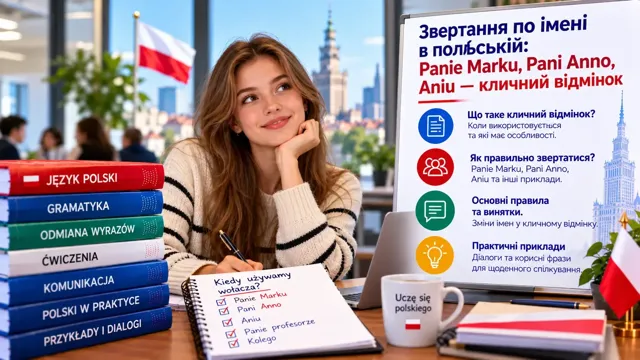
Addressing people in Polish: Panie Marku, Pani Anno, Aniu — the vocative
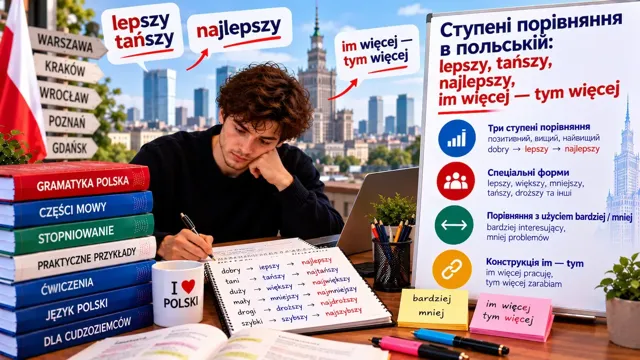
Comparatives and superlatives in Polish: lepszy, tańszy, najlepszy, im więcej — tym więcej