Polish cases on one page: questions, examples and the traps learners fall into
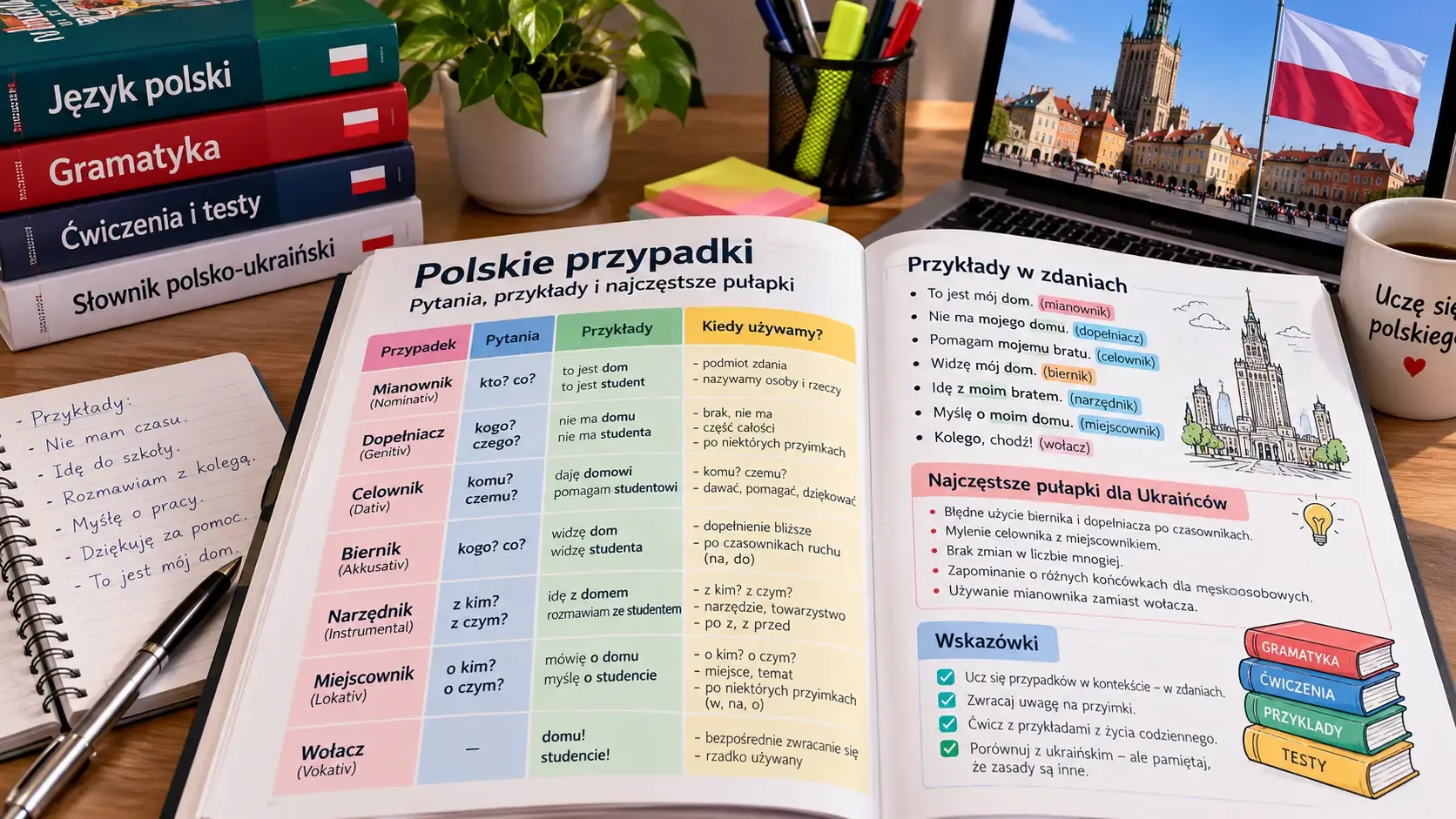

For English speakers, Polish cases are the scariest part of the language: seven of them, each noun changing its ending depending on its role in the sentence. You say "Jestem kierowca" and a Pole understands but hears the mistake. You say "Nie mam samochód" — another mistake. The good news: you don't need every table to speak correctly in everyday situations. You need to know what each case is for and where people most often slip.
The common advice "memorise the ending tables" works badly in practice: there are dozens of them, and nobody has time to recall them mid-conversation. It's far more useful to know the job of each case and the typical traps. Here's the whole system on one page.
The seven cases in brief
- Mianownik (nominative) — kto? co? Who or what does the action. "To jest Anna", "Autobus jedzie".
- Dopełniacz (genitive) — kogo? czego? Absence, part of something, possession, after many verbs. "Nie mam czasu" (I have no time), "szklanka wody" (a glass of water), "dom brata" (brother's house).
- Celownik (dative) — komu? czemu? To whom we give or help. "Daję bratu prezent", "Pomagam mamie".
- Biernik (accusative) — kogo? co? The direct object. "Mam pytanie", "Kocham Annę", "Widzę brata".
- Narzędnik (instrumental) — (z) kim? (z) czym? Means, company, and after być. "Jadę autobusem" (I go by bus), "Rozmawiam z szefem", "Jestem kierowcą".
- Miejscownik (locative) — o kim? o czym? Only with the prepositions w, na, o, przy, po. "Mieszkam w Polsce", "Myślę o pracy".
- Wołacz (vocative) — addressing someone. "Panie Marku!", "Pani Anno!", "Mamo!".
The most common endings (singular)
- Genitive: masculine -a or -u (brata, domu), feminine -y or -i (pracy, Anny), neuter -a (okna).
- Dative: masculine -owi (szefowi; but bratu, panu), feminine -e/-i/-y (mamie, Ani, pracy), neuter -u (dziecku).
- Accusative: feminine -ę (kawę, Annę); masculine inanimate = nominative (mam dom); masculine animate = genitive (widzę brata).
- Instrumental: masculine and neuter -em (szefem, oknem), feminine -ą (kawą, mamą).
- Locative: often -e with a consonant change (w Krakowie, w biurze) or -u (w domu, na rynku).
Trap 1. Negation changes the case
After a negation the accusative becomes genitive. "Mam samochód" — but "Nie mam samochodu". "Lubię kawę" — but "Nie lubię kawy". It's one of the most frequent mistakes learners make.
Trap 2. Być + instrumental
A profession, nationality or role after "być" goes into the instrumental: "Jestem kierowcą" (I'm a driver), "On jest Anglikiem", "Ona jest nauczycielką". But after "to" it's nominative: "To jest kierowca".
Trap 3. Accusative for "living" masculine nouns
For masculine people and animals, the accusative looks like the genitive: "Widzę brata", "Mam psa", "Znam szefa". For inanimate nouns, like the nominative: "Widzę dom", "Mam samochód".
Trap 4. Verbs that take a different case
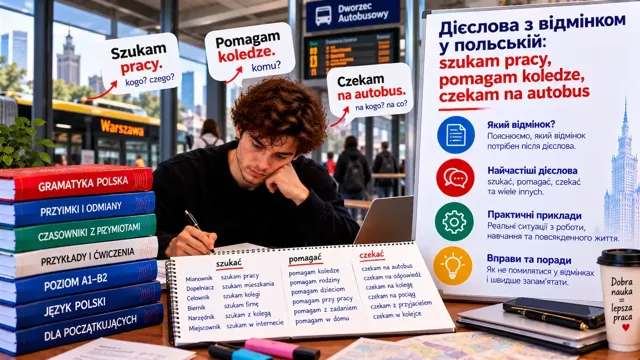
- Szukać + genitive: "Szukam pracy" — I'm looking for work.
- Potrzebować + genitive: "Potrzebuję pomocy" — I need help.
- Uczyć się + genitive: "Uczę się polskiego" — I'm learning Polish.
- Bać się + genitive: "Boję się psów" — I'm afraid of dogs.
- Pomagać + dative: "Pomagam koledze" — I help a colleague.
Trap 5. Where vs where to
"Where?" — locative: "Jestem w pracy" (I'm at work), "Jestem na urlopie" (I'm on holiday). "Where to?" — other cases: "Idę do pracy" (do + genitive), "Jadę na urlop" (na + accusative). The same preposition "na", different cases — and different meanings.
Trap 6. Numbers and the genitive plural
From 5 upwards, the noun goes into the genitive plural: "dwa złote" but "pięć złotych"; "trzy godziny" but "sześć godzin". You'll notice this trap most when talking about money and time.
How to practise cases without tables
Learn ready phrases, not separate endings. Write 3 phrases from your own life for each trap: "Szukam mieszkania" (I'm looking for a flat), "Nie mam umowy" (I don't have a contract), "Jestem magazynierem" (I'm a warehouse worker). Repeat them until they come out on their own. After a few weeks the right case will appear automatically in familiar situations.
Checklist: test yourself
- Negation. After "nie" — genitive: nie mam czasu.
- Być. Jestem + instrumental: jestem kierowcą.
- Animate masculine. Widzę brata, not widzę brat.
- Szukać, potrzebować, uczyć się. + genitive.
- Where / where to. W pracy — do pracy; na urlopie — na urlop.
- Numbers. From five — genitive plural: pięć złotych.
Subscribe to our newsletter:
Latest Posts:
Latest Posts:

Personal pronouns in Polish: go or jego, cię or ciebie, do niego, z nią
Verbs and their cases in Polish: szukam pracy, pomagam koledze, czekam na autobus

Addressing people in Polish: Panie Marku, Pani Anno, Aniu — the vocative
Comparatives and superlatives in Polish: lepszy, tańszy, najlepszy, im więcej — tym więcej