What to read in Polish at A2–B1: 10 books and genres to start with
Marta decided to read in Polish and started with Sienkiewicz — "because it's the classic every Pole knows". By page three she had twenty unknown words, half of which aren't used in modern Polish any more. The book went back on the shelf, and her wish to read went with it.
The popular advice "read the classics, you'll learn faster" often does more harm than good at A2–B1. Nineteenth-century classics mean archaic vocabulary and long sentences that trip up even Poles. For practice you need texts where you understand 90–95% of the words: then new ones stick from context and reading is a pleasure rather than a slog. Here's a selection to start with. Levels are approximate — it all depends on your vocabulary.
Children's classics: easier than you think
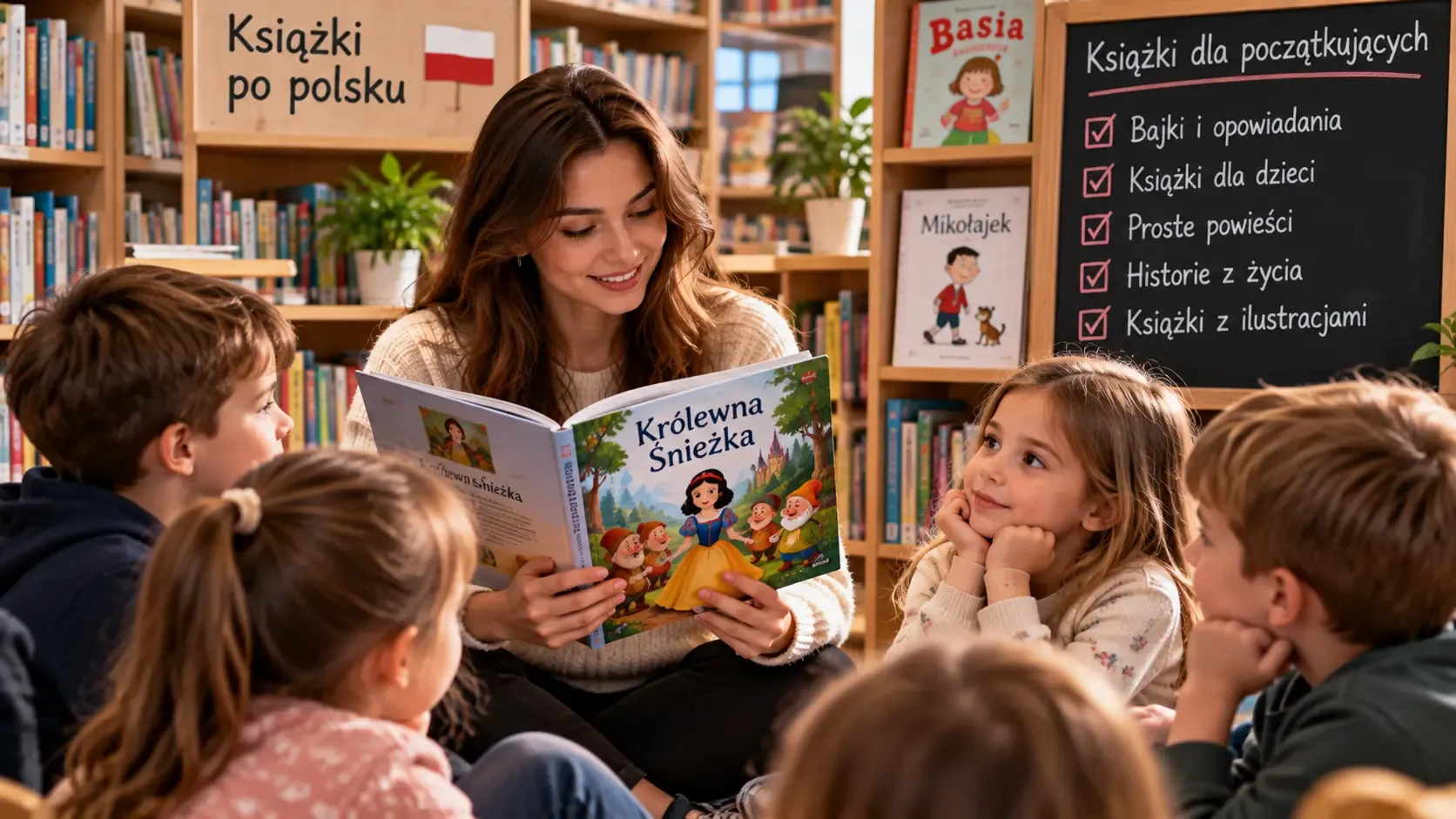
- "Mikołajek" (Goscinny, Sempé) — short, funny stories about a French schoolboy (Le Petit Nicolas) in Polish translation. Each is 5–7 pages, perfect for an evening. Roughly A2+.
- "Kubuś Puchatek" (A. A. Milne) — Winnie-the-Pooh in Irena Tuwim's classic translation. Simple vocabulary but lots of wordplay — good once you feel a bit confident.
- Books for 8–12-year-olds — contemporary Polish children's novels. Simple sentences, lively spoken language, a plot that keeps you going.
Comics: the language people actually speak
- "Kajko i Kokosz" (Janusz Christa) — a cult Polish comic about two warriors. Short lines, humour, lots of colloquial expressions.
- "Tytus, Romek i A'Tomek" (Papcio Chmiel) — another Polish comic classic known to several generations.
- Translations of famous comics — "Asteriks", "Tintin" in Polish: familiar plots, new language.
In comics the drawings explain half the text — huge support at A2.
Youth fiction: B1 level
- Małgorzata Musierowicz, the "Jeżycjada" series — novels about a family in Poznań. Everyday life, school, relationships, gentle humour. Plenty of modern everyday vocabulary.
- Kornel Makuszyński, "Szatan z siódmej klasy" — an adventure novel read in Polish schools. The language is a bit old-fashioned, so it's better closer to B1+.
A familiar story in Polish translation
- "Harry Potter i Kamień Filozoficzny" — translated by Andrzej Polkowski. If you know the plot, your brain doesn't spend effort on "what's happening" and focuses on the language.
- Agatha Christie mysteries in Polish — simple dialogue, short chapters, and wanting to know whodunnit is the best motivation to finish. Roughly B1.
Graded readers for foreigners
Several Polish publishers produce series adapted for learners of Polish as a foreign language — with the level on the cover (A1, A2, B1), glossaries and exercises. It's the safest start: the vocabulary matches your level, and the stories are written by adults for adults. Look for them in bookshops under "polski jako obcy" or "czytanki".
Poetry: for slow reading
Wisława Szymborska's poems are short and written in simple words, but with deep meaning. One poem a day takes 5 minutes, and you can find recordings of her or actors reading them and listen along. For pronunciation, try Polish tongue twisters: every Pole knows "W Szczebrzeszynie chrząszcz brzmi w trzcinie", and it's a great test of your rz, cz and sz.
Where to get books legally
- City libraries. A library card in Poland is free; you need an ID and an address. Big libraries sometimes have "polski jako obcy" shelves.
- Wolne Lektury. A legal free library of public-domain works — including audio versions.
- Second-hand bookshops and used-book platforms. Children's books and comics cost a few złoty there.
- Audiobooks on legal subscription services — handy to combine with a paper book.
How to choose your first book
Open any page and count the unknown words in one paragraph. If there are more than 5–6 per 100 words, the book is too hard for now — put it aside for a few months. If 1–3, it's your level. Start with something short: a thin book you finish motivates far more than a thick one you abandon.
Checklist before your first book
- Level. Do the "5 unknown words per paragraph" test.
- Genre. Choose something you'd enjoy in your own language too.
- Length. Start with a short book or a story collection.
- Library. Get a free library card.
- Audio. If possible, find an audio version to listen along.
- Legality. No pirated files — there are enough free and cheap options.
Subscribe to our newsletter:
Latest Posts:
Latest Posts:
Personal pronouns in Polish: go or jego, cię or ciebie, do niego, z nią
Verbs and their cases in Polish: szukam pracy, pomagam koledze, czekam na autobus
Addressing people in Polish: Panie Marku, Pani Anno, Aniu — the vocative
Comparatives and superlatives in Polish: lepszy, tańszy, najlepszy, im więcej — tym więcej