CUKR: a few months left until 4 March 2027 — who has not applied and what matters
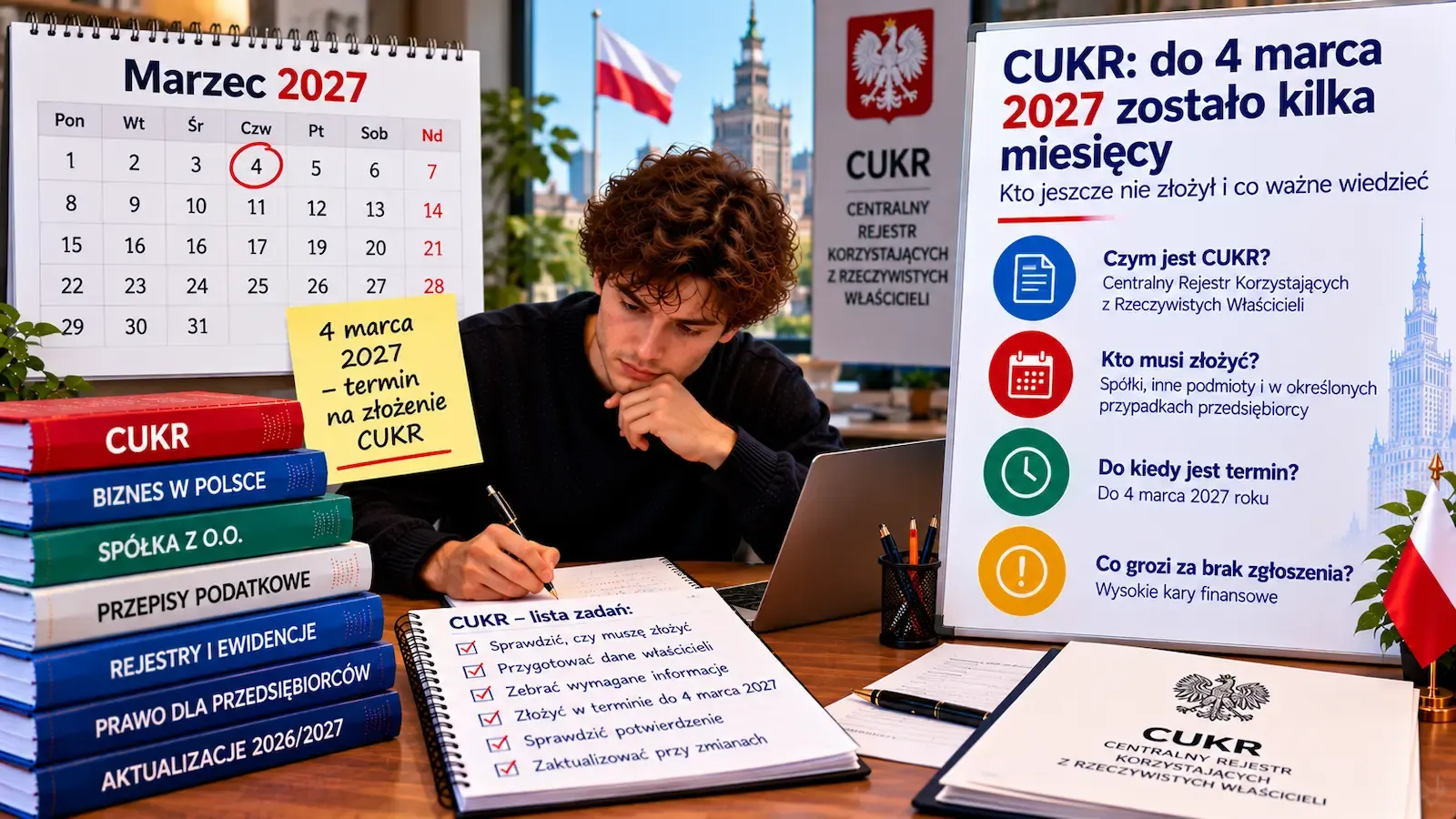

For many Ukrainians in Poland the time has come when "later" no longer works. You can apply for the CUKR residence card until 4 March 2027, and the remaining time passes quickly: preparing data in the register, booking, giving fingerprints, waiting for the decision. This news item is a short reminder and a collection of what is known as of 22 October 2026, including the risks that not everyone mentioned before.
In short: what CUKR is and for whom
CUKR is a residence card with a special marking for Ukrainian citizens who previously had UKR status. According to official announcements the card is issued for three years, and after you receive it UKR status changes to CUKR automatically. Applications have been accepted since 4 May 2026 through the MOS system. We wrote about the conditions, documents and fee in a separate article; here are only the main points.
- To have UKR status on 4 June 2025 and on the day of filing.
- To have uninterrupted UKR status for at least 365 days.
- To have a valid foreign passport and complete data in the PESEL register.
- To file electronically via MOS with a signature or a trusted profile.
- To pay the fee (according to UNHCR it is PLN 100 for the card and PLN 340 stamp duty).
What else is known from recent months
According to lawyers' reviews the new scheme came into force on 5 March 2026. The protection that applied earlier remains until 4 March 2027, and after that the general rules for foreigners apply. So people who have not moved to CUKR or another basis of residence risk being left without lawful status. A requirement was also mentioned earlier that people with a certain type of status had to confirm their identity in person with a valid document by 31 August 2026, otherwise the status could be lost. If that deadline has passed and you did not do it, consult the voivodeship office or a lawyer as soon as possible.
Leaving the country: a reminder about 30 days
One source notes that being outside Poland for over 30 days may lead to loss of status. So those planning a long trip (to Ukraine or other countries) should clarify in advance how it will affect their situation and not put off applying for CUKR "until after I come back". We wrote about travel during processing separately: a stamp or certificate does not guarantee re-entry.
Why not wait until the last month
- Data in the register. If PESEL has errors or gaps the application cannot be filed, and corrections at the municipal office take time.
- The passport. If it is expiring it must be replaced in advance.
- Load on the system. Near the deadline there are more people and appointments for fingerprints may be delayed.
- Work and benefits. The basis of residence determines the terms of work and child benefits (see our article on 800+).
What to do if you do not meet the conditions
If you have no uninterrupted status or do not meet other conditions, look at other bases: work under a permit or an oświadczenie, study, family reunification. Each has its own requirements, deadlines and fees, so seek advice from the voivodeship, a lawyer or human rights organisations. It is also useful to look at vacancies for Ukrainians, where employers are ready to help with paperwork and explain the terms of legal work.
A practical plan for the coming weeks
- Check your data in the PESEL register (name, date of birth, address, documents).
- Check the validity of your foreign passport.
- Create an account in MOS and prepare an electronic signature or a trusted profile.
- File the application and keep the certificate of filing.
- Watch letters and your MOS profile: answer requests to supplement documents on time.
Useful words in Polish
- karta pobytu CUKR — the CUKR residence card.
- wniosek / termin — an application / a deadline.
- odciski palców — fingerprints.
- urząd wojewódzki — the voivodeship office.
Summary
A few months remain until 4 March 2027, and the earlier you apply the fewer the risks. Check the data in PESEL, your passport and the basis of residence, do not plan long trips without advice and do not rely on "intermediaries". The information is given from open sources (government pages, law firm reviews, UNHCR) as of 22 October 2026; conditions and dates change, so check them against the "Green Line" portal and the MOS page.
Subscribe to our newsletter:
Latest Posts:
Latest Posts:

Personal pronouns in Polish: go or jego, cię or ciebie, do niego, z nią
Verbs and their cases in Polish: szukam pracy, pomagam koledze, czekam na autobus

Addressing people in Polish: Panie Marku, Pani Anno, Aniu — the vocative
Comparatives and superlatives in Polish: lepszy, tańszy, najlepszy, im więcej — tym więcej