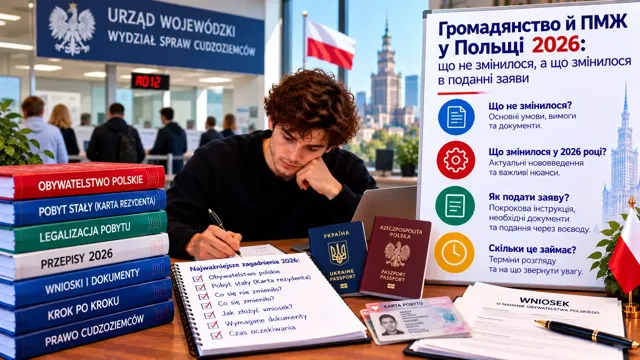
Polish citizenship: two routes and who can count on which

Some believe Polish citizenship is "given after ten years of living in Poland". That's not quite right. Ten years is only one of several grounds, and far from the shortest. For some people the path takes one year after getting permanent residence, for others three, and for some there are no formal time limits at all.
The difference lies in which of the two routes you take.
Route one: citizenship granted by the President
The President may grant citizenship to any foreigner, with no requirements for years of stay or language. But it is a discretionary decision: refusals are not justified and cannot be appealed. You apply through the voivode or a consul. This route is usually taken by people with special merits or those who don't fit any category of the second route.
Route two: recognition as a citizen by the voivode
Here the criteria are clear: if you meet them, the voivode must recognise you as a citizen. The main categories:
- 3 years of permanent residence or EU long-term resident status, plus a stable income and a legal title to housing.
- 2 years of permanent residence and a marriage to a Polish citizen lasting at least 3 years.
- 10 years of continuous legal stay, permanent residence, income and housing.
- 1 year of permanent residence granted in connection with Polish origin or the Pole's Card.
- 2 years of permanent residence for people with refugee status.
Periods are counted continuously and from the date you obtained permanent residence, not from your arrival. Changes that lengthen these periods are discussed in Poland from time to time, so check the current law before applying.
B1 is mandatory
Recognition requires proof of Polish at B1 level or higher. Accepted documents:
- a state certificate in Polish as a foreign language;
- a certificate from a Polish school — secondary or higher;
- a university diploma from a programme taught in Polish.
Ordinary course certificates from language schools are not accepted. Without a proper document, the application is returned without being examined.
What about your previous citizenship
Poland does not require you to give up another citizenship. But to the Polish state you will be only a Polish citizen — for example, in consular matters on its territory. How your home country treats dual citizenship is a separate question to check in its own law.
How much it costs
The fee for a decision recognising you as a citizen is PLN 219. Add the cost of sworn translations and the B1 certificate. Processing officially takes a few months; in practice it varies by voivodeship.
Checklist before applying
- Category. Determine which ground applies to you and check the current time limit.
- Permanent residence date. The period runs from it — keep the decision at hand.
- Continuity. Count your trips: long breaks can reset your time.
- B1 certificate or a Polish school certificate or diploma.
- Income and housing — PIT returns, statements, a rental agreement or title deed.
- Birth and marriage certificates with sworn translations.
Subscribe to our newsletter:
Latest Posts:
Latest Posts:
Personal pronouns in Polish: go or jego, cię or ciebie, do niego, z nią
Verbs and their cases in Polish: szukam pracy, pomagam koledze, czekam na autobus

Addressing people in Polish: Panie Marku, Pani Anno, Aniu — the vocative
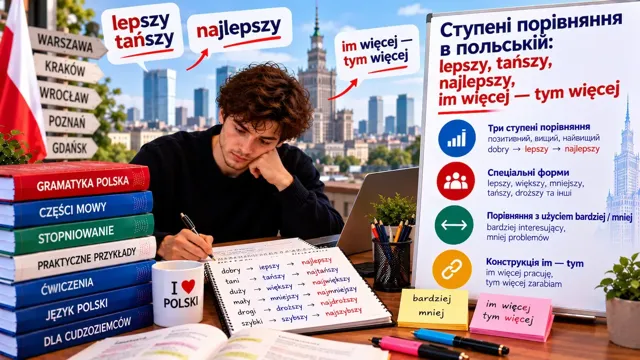
Comparatives and superlatives in Polish: lepszy, tańszy, najlepszy, im więcej — tym więcej