Karta stałego pobytu or EU long-term resident: the difference and which to choose
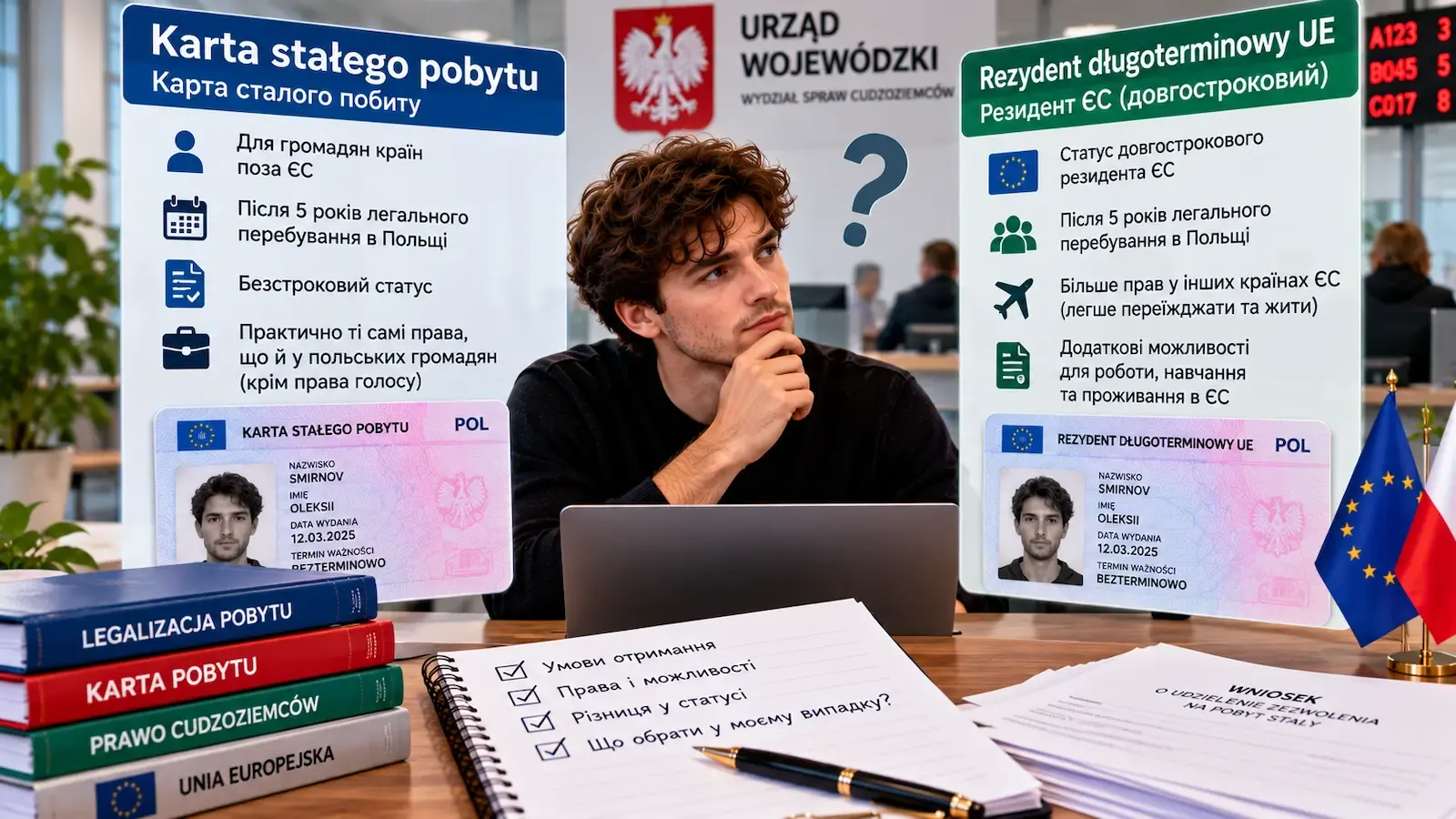

People call both documents "the permanent card", and both let you live in Poland with no time limit. So many assume they're just two names for the same thing. In fact they're different permits with different conditions, and often a person qualifies for only one — or for both, but one is clearly better.
Let's look at examples: who each suits, where the conditions are easier, and what each status gives in practice.
Who can get karta stałego pobytu
Zezwolenie na pobyt stały is a permit for people with a special link to Poland. The most common grounds:
- Polish origin, confirmed by documents.
- Karta Polaka — if you want to settle in Poland permanently.
- Marriage to a Polish citizen — at least 3 years of marriage and 2 years of continuous stay in Poland on a card issued in connection with the marriage.
- Child of a Polish citizen or child of a foreigner with permanent residence — under certain conditions.
- Refugee status or subsidiary protection — after several years of stay.
The main advantage: for many grounds you don't need to prove income or pass a B1 exam.
Who can get EU long-term resident status
Zezwolenie na pobyt rezydenta długoterminowego UE is the route for people who have simply lived in Poland legally for a long time. Conditions:
- 5 years of continuous legal stay (with separate rules on how study and some other grounds count).
- Stable and regular income over the last 3 years — above the social assistance threshold.
- Health insurance.
- Polish language — a B1 certificate or a Polish diploma.
Point-by-point comparison
- Permit duration. Both indefinite.
- Document. The permanent residence card is issued for 10 years, the EU resident card for 5 years; then the document is replaced, the permit stays.
- Work. In both cases — no work permit needed, any employer, self-employment too.
- Other EU countries. EU resident status gives a simplified route to living and working in another EU state (under its rules). The permanent residence card doesn't.
- Losing the status. Both can be lost after a very long absence: for EU residents there are clear limits on time spent outside the EU and Poland. If you plan a long trip, check the rules.
- Citizenship. After 3 years with either permit (plus income, housing and B1) you can apply to be recognised as a citizen.
What to choose if both fit
Take Andriy: he's worked in Poland for 6 years, has Karta Polaka and a B1 certificate. Formally he can apply for either permit. If Andriy doesn't plan to move to another EU country, karta stałego pobytu based on Karta Polaka is usually simpler: fewer income documents, a longer document validity. If he's thinking about working in, say, Germany or Czechia, EU resident status may be more useful.
You can't hold both permits at once — you have to choose. But if circumstances change, you can apply for the other later.
If only EU resident status fits
Most foreigners who came to work without Polish roots have only one route — EU long-term resident. Then three things decide everything: continuous stay without long breaks, income over three years and a B1 certificate. Prepare for the exam in advance, as places in B1 sessions in popular cities go quickly.
The procedure: similar but not identical
Both applications go to the voivode where you live. Both carry stamp duty plus a separate fee for issuing the card — check the exact amounts on the voivodeship office's website before applying. The statutory processing time is a few months; in practice it's often longer. While your case is pending your stay is legal, provided you applied while staying legally.
Checklist: choosing between the two cards
- Grounds. Check whether you have Polish origin, Karta Polaka or a Polish spouse.
- Time. Count your years of continuous legal stay.
- Income. Collect PIT forms and certificates for the last 3 years — mandatory for EU resident status.
- Language. Without B1 the EU resident route is closed.
- Plans. Thinking about other EU countries — consider EU resident status.
- Citizenship. After 3 years on either permit you can go further.
Subscribe to our newsletter:
Latest Posts:
Latest Posts:
Personal pronouns in Polish: go or jego, cię or ciebie, do niego, z nią
Verbs and their cases in Polish: szukam pracy, pomagam koledze, czekam na autobus
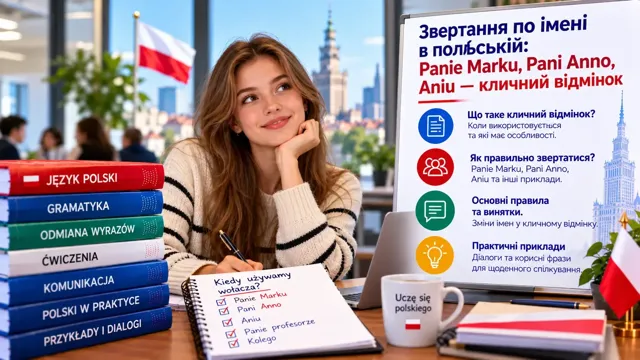
Addressing people in Polish: Panie Marku, Pani Anno, Aniu — the vocative
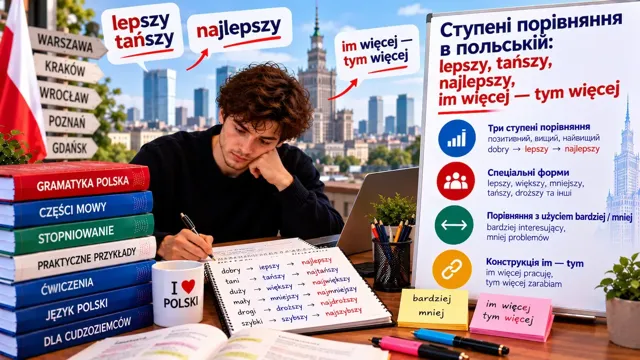
Comparatives and superlatives in Polish: lepszy, tańszy, najlepszy, im więcej — tym więcej