Pasek wynagrodzeń: how to read your Polish payslip and spot mistakes
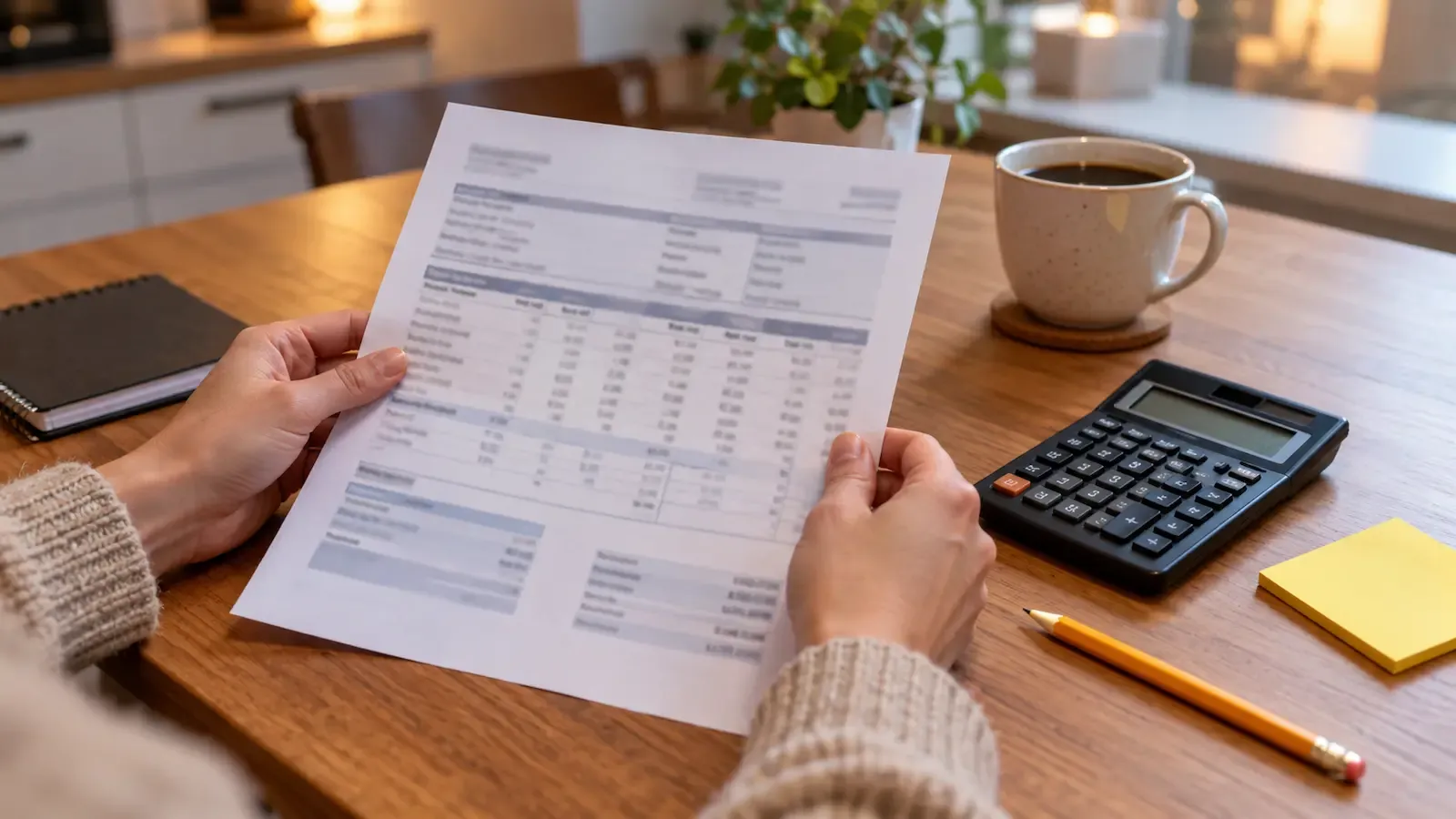

Olena has been working in a warehouse in Poznań for three months. Her contract says minimum wage, 4,806 złoty gross. What lands on her card is 3,605. For two months she suspected the agency was "underpaying" her, so in month three she asked for her pasek wynagrodzeń and sat down with a pencil. Everything added up to the grosz. Her colleague from the same shift, though, found a real mistake on his: eight night hours that hadn't been counted.
Many people think a payslip is accounting paperwork no ordinary person can follow. It isn't. A pasek usually has 15–20 lines, and half of them repeat every month. Work through it once and checking your pay takes two minutes from then on.
Top section: what makes up your gross pay
First come the earnings — everything you earned before deductions:
- Wynagrodzenie zasadnicze. Your base pay from the contract — monthly, or hourly rate times hours worked.
- Dodatek za pracę w nocy. Night-work supplement. If you work nights and this line is missing, that's the first thing to ask about.
- Nadgodziny 50% / 100%. Overtime, shown separately from base pay with the supplement rate.
- Premia. A bonus — regular or one-off. If the contract makes it mandatory, it can't be "forgotten".
- Wynagrodzenie chorobowe / zasiłek. Pay for sick days. Base pay will be lower that month, and that's normal.
- Ekwiwalent za urlop. Payment for unused holiday — appears when the contract ends.
Middle section: ZUS contributions and tax
Mandatory payments are then taken from the gross amount. On umowa o pracę they are:
- Emerytalne — 9.76%. Pension contribution.
- Rentowe — 1.5%. Disability contribution.
- Chorobowe — 2.45%. This is what gives you paid sick leave.
- Składka zdrowotna — 9%. NFZ health insurance. It's calculated not from the full gross, but from gross minus the three contributions above.
- Zaliczka na PIT. Income tax advance: 12% of the base, reduced by 300 złoty if you gave your employer a PIT-2 form.
Two more lines often scare people, though no money is taken: koszty uzyskania przychodu (250 zł, or 300 if you live in another town and commute) and ulga podatkowa. They only reduce the base for tax.
Example: the 2026 minimum wage
Here's the calculation for 4,806 zł gross, full-time, employee over 26, PIT-2 submitted:
- ZUS contributions: 469.07 + 72.09 + 117.75 = 658.91 zł.
- Health contribution base: 4,806 − 658.91 = 4,147.09. Składka zdrowotna: 373.24 zł.
- Tax base: 4,806 − 658.91 − 250 = 3,897 zł (rounded). 12% is 467.64, minus 300 = 168 zł advance.
- Take-home: 4,806 − 658.91 − 373.24 − 168 = 3,605.85 zł.
If you're under 26, the tax line will be zero (ulga dla młodych) and your net pay noticeably higher. If your figures differ by a few złoty, that's rounding. If they differ by hundreds, look for the reason.
Bottom section: deductions and the amount paid out
After tax there may be potrącenia — deductions from net pay. Most often: agency housing, an advance, PPK (a pension scheme, 2% of gross, unless you opted out) or a bailiff's order. On an employment contract, deductions for housing or other services are only allowed with your written consent. The last line is do wypłaty: this is the amount that should reach your account.
Where mistakes usually happen
- Hours. Compare the hours on the pasek with your own shift record. Keep one yourself — even in your phone notes.
- Nights. The night supplement is due for every hour in the night window, even if you only did one night shift.
- PIT-2. Without this form, 300 zł more tax is withheld every month. You only get it back after the annual tax return.
- Koszty 300 zł. If you live in a different town from work, submit a statement — your tax goes down.
- Housing. The housing deduction must match what you agreed to in writing.
The law doesn't require employers to print a pasek every month, but you have the right to know how your pay was calculated. Ask for the breakdown in writing or electronically — most companies already have it in an app or send it by email.
Checklist: check your payslip in 2 minutes
- Rate. Does it match the contract — hourly or monthly?
- Hours. Are all shifts counted, including nights and overtime?
- Tax. Is PIT-2 applied and, if you're under 26, ulga dla młodych?
- Deductions. Did you sign for every line under potrącenia?
- Deadline. Pay must arrive no later than the 10th of the following month.
- Copies. Keep payslips for at least a year — you'll need them for a residence card and taxes.
Subscribe to our newsletter:
Latest Posts:
Latest Posts:

Personal pronouns in Polish: go or jego, cię or ciebie, do niego, z nią

Verbs and their cases in Polish: szukam pracy, pomagam koledze, czekam na autobus

Addressing people in Polish: Panie Marku, Pani Anno, Aniu — the vocative

Comparatives and superlatives in Polish: lepszy, tańszy, najlepszy, im więcej — tym więcej